64
Research Trials
29
Peer-reviewed publications
17
Clinical Conditions
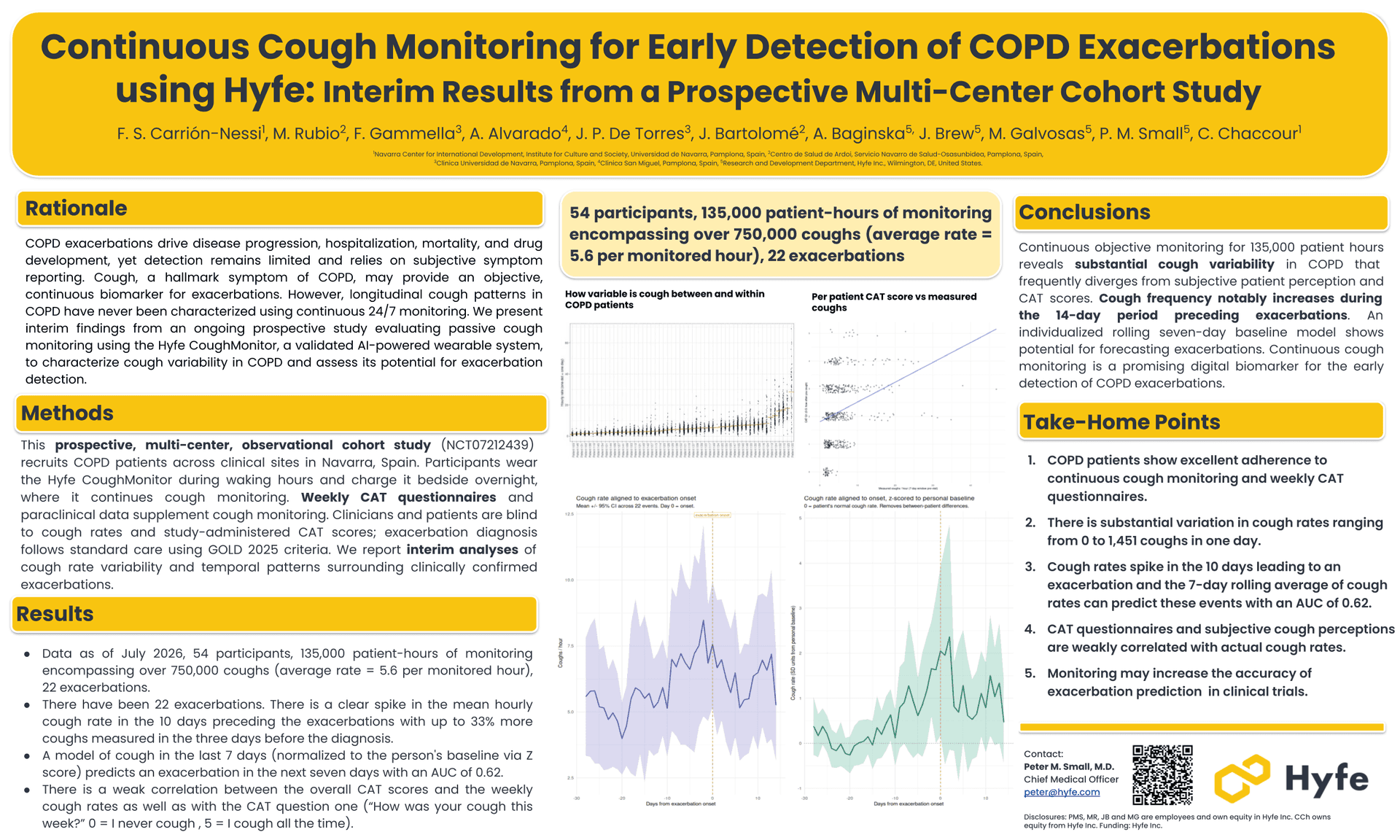
Updated interim data from 54 COPD patients and 135,000 monitored hours, showing cough rates rise in the days before exacerbations and correlate only weakly with CAT scores.
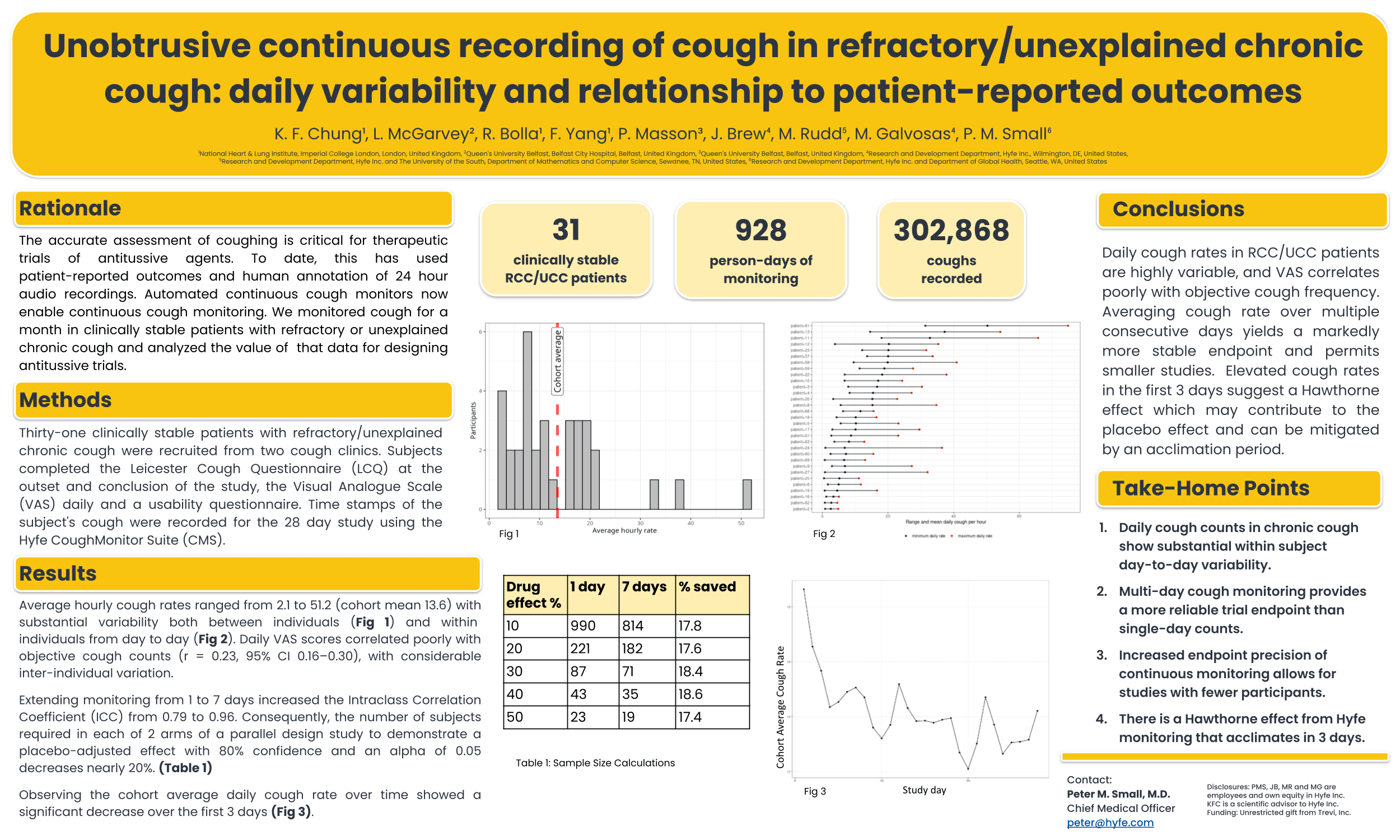
A month of continuous monitoring in stable chronic cough shows that multi-day averaging makes cough frequency a more reliable trial endpoint, allowing smaller studies, and reveals a short-lived Hawthorne effect.

Mixed-methods study in Kampala assessing 48-hour cough frequency monitoring with the Hyfe Research app for TB screening and triage, alongside staff-reported implementation barriers.
2 July 2021 · BMJ Open

This paper proposes an observational protocol to monitor and analyze acoustic data (like cough sounds) to identify potential outbreaks rapidly. It aims to develop a digital acoustic surveillance system for the early detection of respiratory disease outbreaks in Spain.
The researchers are utilizing digital devices, such as smartphones and environmental sensors, running AI powered cough detection technology, to record acoustic oustic data in selected regions of Spain. Advanced algorithms and artificial intelligence techniques are applied to the collected acoustic data to detect patterns indicative of respiratory diseases.
The study will be conducted in diverse regions across Spain, possibly targeting areas with high population densities or previous records of significant respiratory disease outbreaks.
Key Takeaways
Implications for Public Health Policy: Successful implementation of this protocol could influence public health policies, especially in adopting more digital and AI-based approaches for disease surveillance and response.
Bring objective cough data to your study. Schedule a meeting →


