Find all editions of Cough Science News below and get access to the latest cough science developments, publications, and interviews with cough experts.
5 May 2025
Here's What's Inside
Key Takeaway: In this 12-week double-blind study, 32 patients with COPD were monitored at home using a stationary bedside device that tracked nighttime cough frequency. The system flagged 59% of exacerbations, with 26% detected before symptom onset, providing a median lead time of 6 days. Importantly, the system required no patient input and was rated as unobtrusive and acceptable by nearly all participants.
Why It Matters: Early intervention is crucial in COPD, but existing tools rely on patient-reported data and have high false alert rates. This study shows that passive cough monitoring offers a low-burden, high-specificity alternative. While 30% of exacerbations occurred without increased coughing, this approach still offers a promising foundation for future remote monitoring systems in COPD.
Key Takeaway: In this multicentre observational study of 248 patients with progressive pulmonary fibrosis (PPF), over 75% reported experiencing cough, a symptom that significantly affected health-related quality of life. Cough severity, measured by VAS and LCQ scores, was associated with poorer lung function and reduced six-minute walk distances, highlighting its clinical importance beyond breathlessness alone.
Why It Matters: Cough is common in PPF and contributes meaningfully to the disease burden, yet it remains under-recognised and inadequately managed. This study highlights the need to treat cough as a key symptom in PPF care and to prioritise it in future treatment approaches and clinical research.
Key Takeaway: This expert review outlines the ongoing challenges in managing chronic cough and the emerging shift from traditional anatomical diagnoses to a treatable traits approach. Despite the growing recognition of cough hypersensitivity as a core mechanism, there are still no widely approved drug treatments. Promising candidates like P2X3 antagonists show potential, but high placebo responses and outdated endpoints have stalled progress.
Why It Matters: Chronic cough is increasingly seen as a distinct disease, but clinical trials and treatment strategies have struggled to keep up. The authors call for better-designed trials, modern patient-reported outcomes, and wider adoption of continuous cough monitoring to address cough’s variability. They also highlight the urgent need for clinician and patient education to improve diagnosis, management, and access to care.
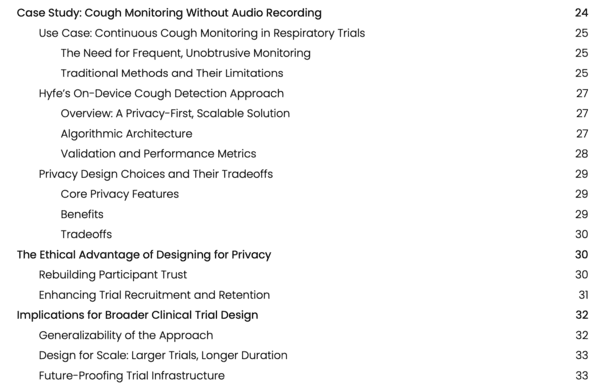
As continuous cough monitoring enters clinical trials, this whitepaper lays out the urgent ethical and operational questions - and the technologies that could solve them.