Find all editions of Cough Science News below and get access to the latest cough science developments, publications, and interviews with cough experts.
13 October 2025
Key Takeaway
In a 7-center U.S. cohort of adults with chronic cough (n=150), the absence of postnasal drip independently differentiated unexplained chronic cough (UCC) from explained chronic cough (ECC) (OR 4.8; 95% CI 1.6–15.3). UCC patients reported more severe cough and greater irritant sensitivity (e.g., perfume, cleaners, air fresheners, cold air, smoke), while demographics (age, sex, race, seasonality) did not discriminate between groups.
Why It Matters
Simple history elements, no postnasal drip plus irritant-triggered, more severe cough, can help clinicians suspect UCC earlier, potentially reducing misdirected asthma/COPD workups and empiric therapies and guiding patients toward cough-focused pathways. Findings are questionnaire-based and need prospective validation, but they offer a pragmatic screening signal for triage in specialty clinics.
Key Takeaway
In a multicenter, non-interventional study of adults with refractory or unexplained chronic cough (n=190; mean cough duration 6.3 years), bouts of cough most strongly elicited anger and anxiety (mean DEQ scores 3.6 and 3.3), with disgust, fear, and sadness also elevated; RCC vs UCC did not differ, and both greater cough severity and cough-related stress urinary incontinence independently correlated with higher negative-emotion scores.
Why It Matters
The data quantify the emotional burden of RCC/UCC and flag two practical signals, severity and SUI, that track with worse emotional impact. Routine intake could include brief emotion screening (or DEQ where feasible) to guide supportive counseling, behavioral therapies, and trial endpoints that capture patient-centred outcomes beyond cough counts alone.
Key Takeaway
This review reframes chronic cough as a neuropathic hypersensitivity disorder driven by peripheral and central neuroinflammatory mechanisms; management should first exclude treatable causes, then prioritize neuromodulators and speech-language (behavioral cough suppression) therapy, with the field moving toward endotyping and novel antitussives.
Why It Matters
Viewing cough through a neuropathic lens shifts practice from endless cause-hunting to targeted, mechanism-based care and patient stratification, setting clearer pathways for therapy selection and trial design as new antitussives emerge.
Thank you to everyone, clinicians, researchers, and industry partners, who met with us in Amsterdam. The conversations were energizing and constructive, and it was clear the cough science community is moving with real momentum, and cough is becoming more important on the ERS agenda.
What stood out
Posters
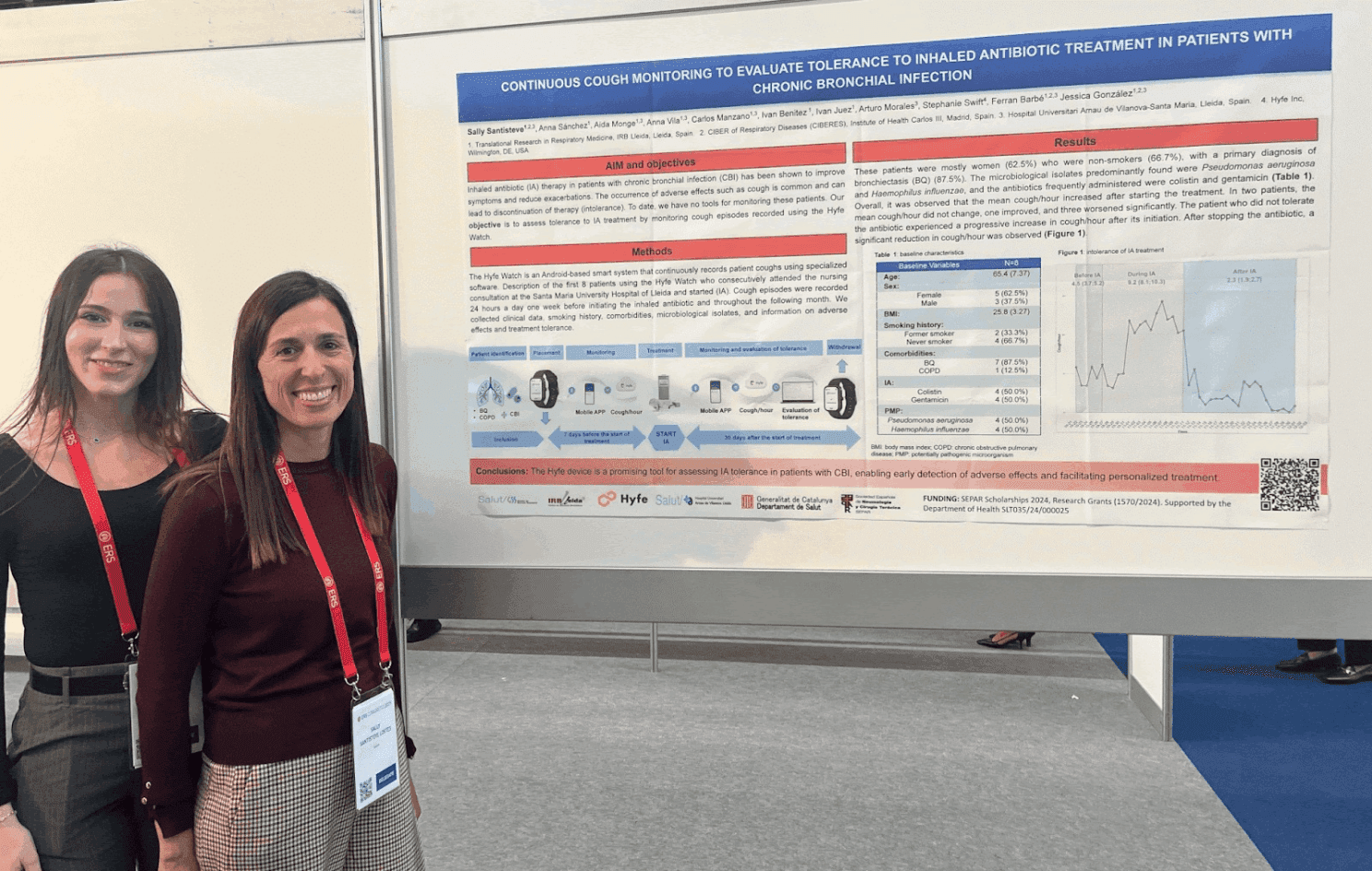
Monitoring tolerance to inhaled antibiotics in chronic bronchial infection: With our partners in Lleida, continuous cough data supported early detection of intolerance and allowed for more personalized treatment decisions.
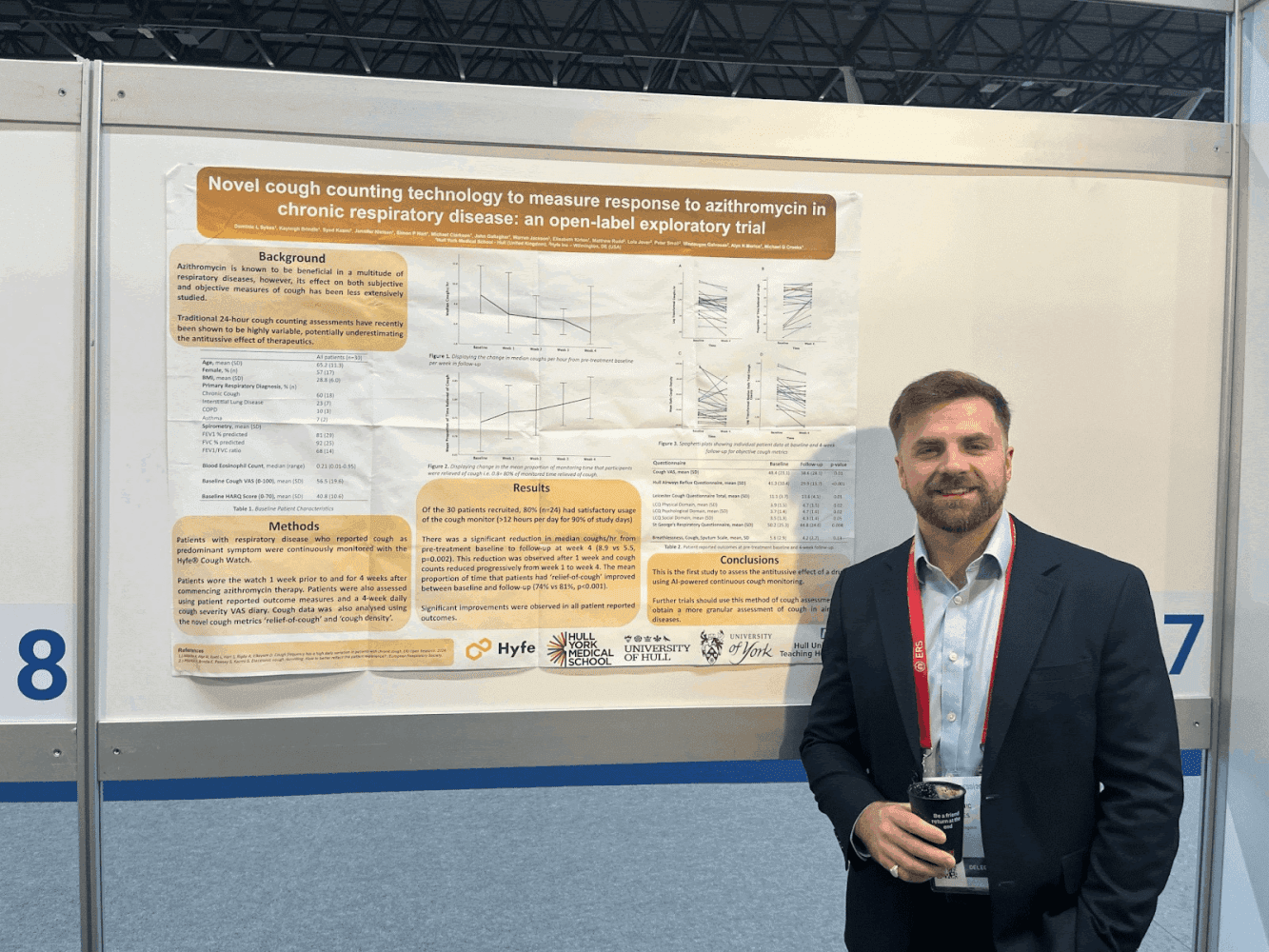
Azithromycin + continuous cough monitoring: First study to assess azithromycin’s antitussive effect using smartwatch-based objective monitoring; authors recommend this approach for granular cough assessment in airways disease trials.
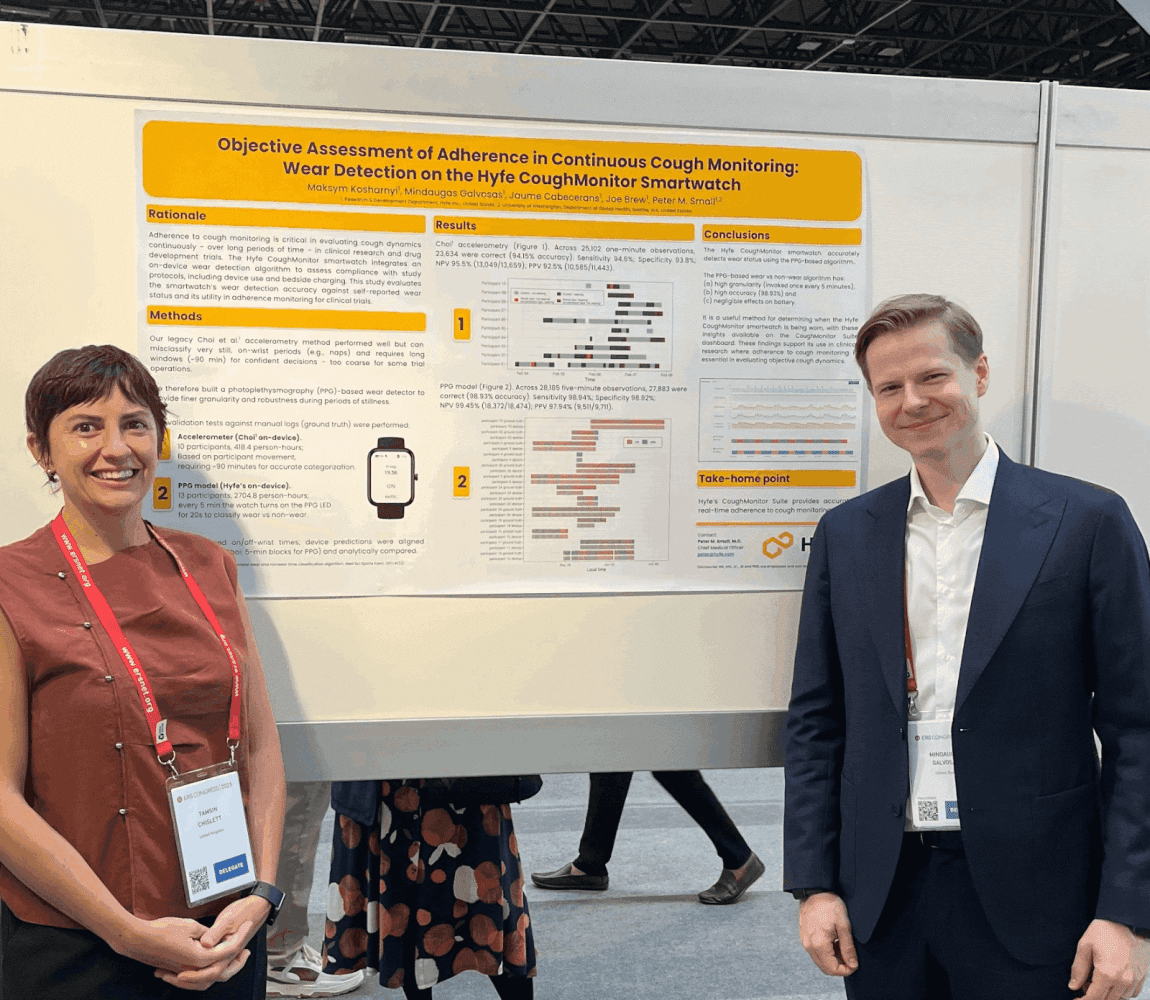
The Hyfe CoughMonitor smartwatch accurately detects wear status using the PPG-based algorithm which has both high granularity and high accuracy. These findings support its use in clinical research where adherence to cough monitoring is essential in evaluating objective cough dynamics.
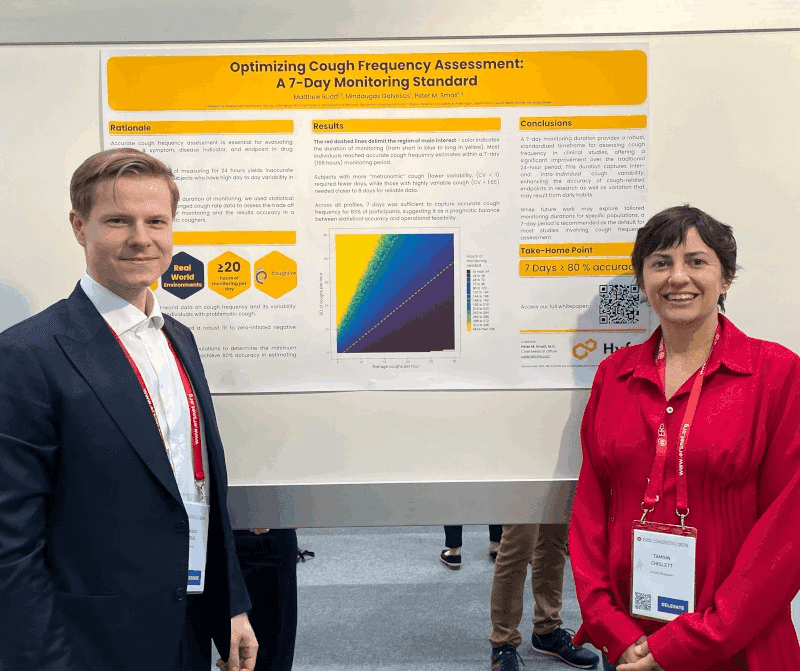
How long to characterise baseline cough? Evidence supporting a 7-day monitoring standard to obtain a stable baseline, rather than relying on single-day snapshots.
If you’d like copies or more information on any posters, simply reply to this email and we’ll send them.
LATE BREAKING! Hyfe is excited to announce the preliminary results of a digital therapeutic (DTx) for chronic refractory cough, to be presented at the CHEST meeting this October 19–22 in Chicago, Illinois. Our scientific advisor, Laurie Slovarp, Ph.D., CCC-SLP, will deliver the late-breaking presentation titled “Digital Therapeutic for Refractory and Unexplained Chronic Cough: A Proof of Concept Study”. If you have any questions - reach out to laurie@coughcoach.com .
Our Digital Health Lead Dr. Mindaugas Galvosas will be attending The Next-generation Digital Biomarkers Summit 2025 on the 6th of November in Zurich, Switzerland. If you are curious to learn more about cough as a biomarker - reach out to mindaugas@hyfe.com .
Until next time,
The Hyfe Team
