53
Research Trials
20
Peer-reviewed publications
16
Clinical Conditions
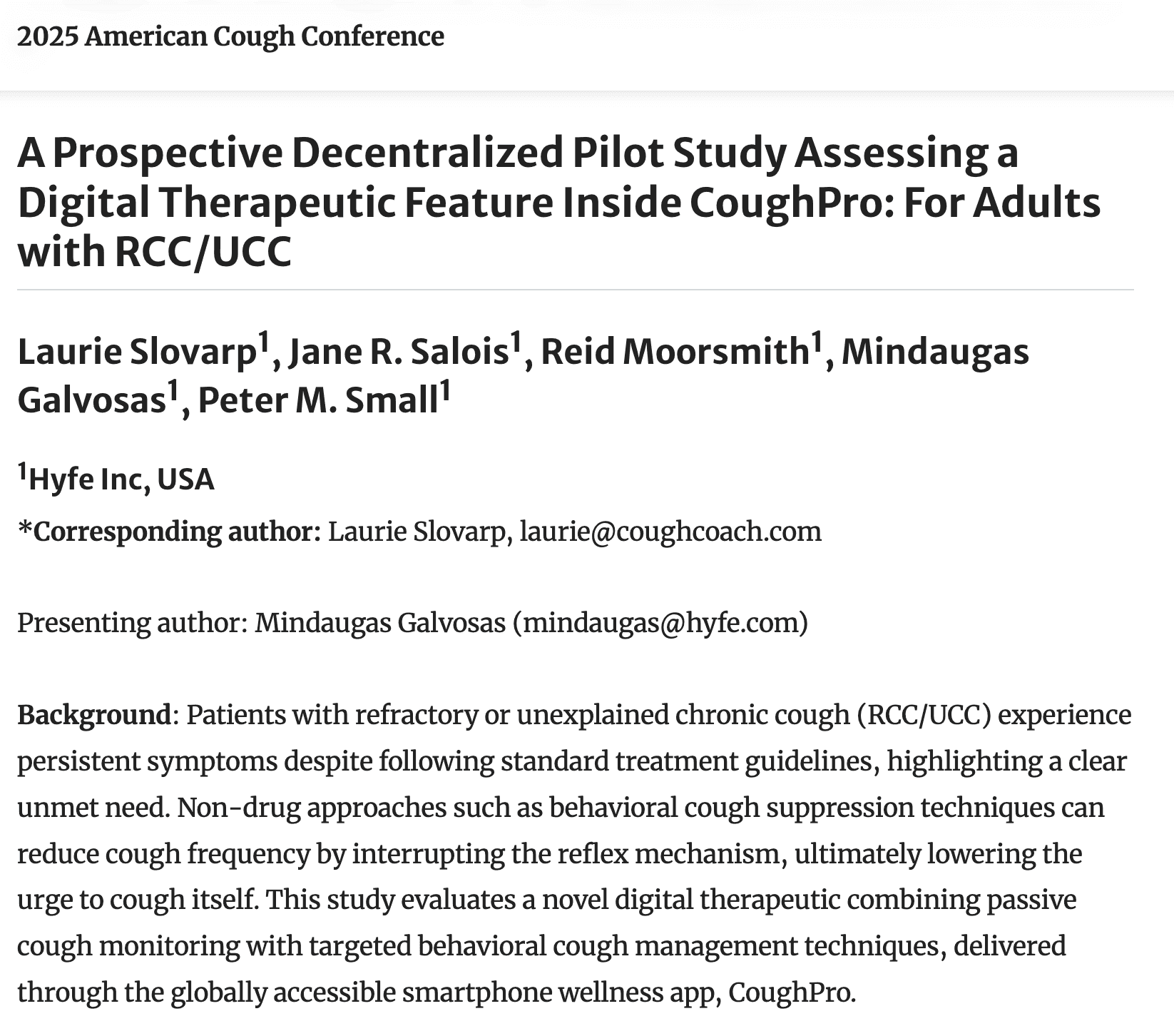
Hyfe pilot study tests a digital therapeutic combining passive cough monitoring with behavioral suppression techniques delivered through the CoughPro app.
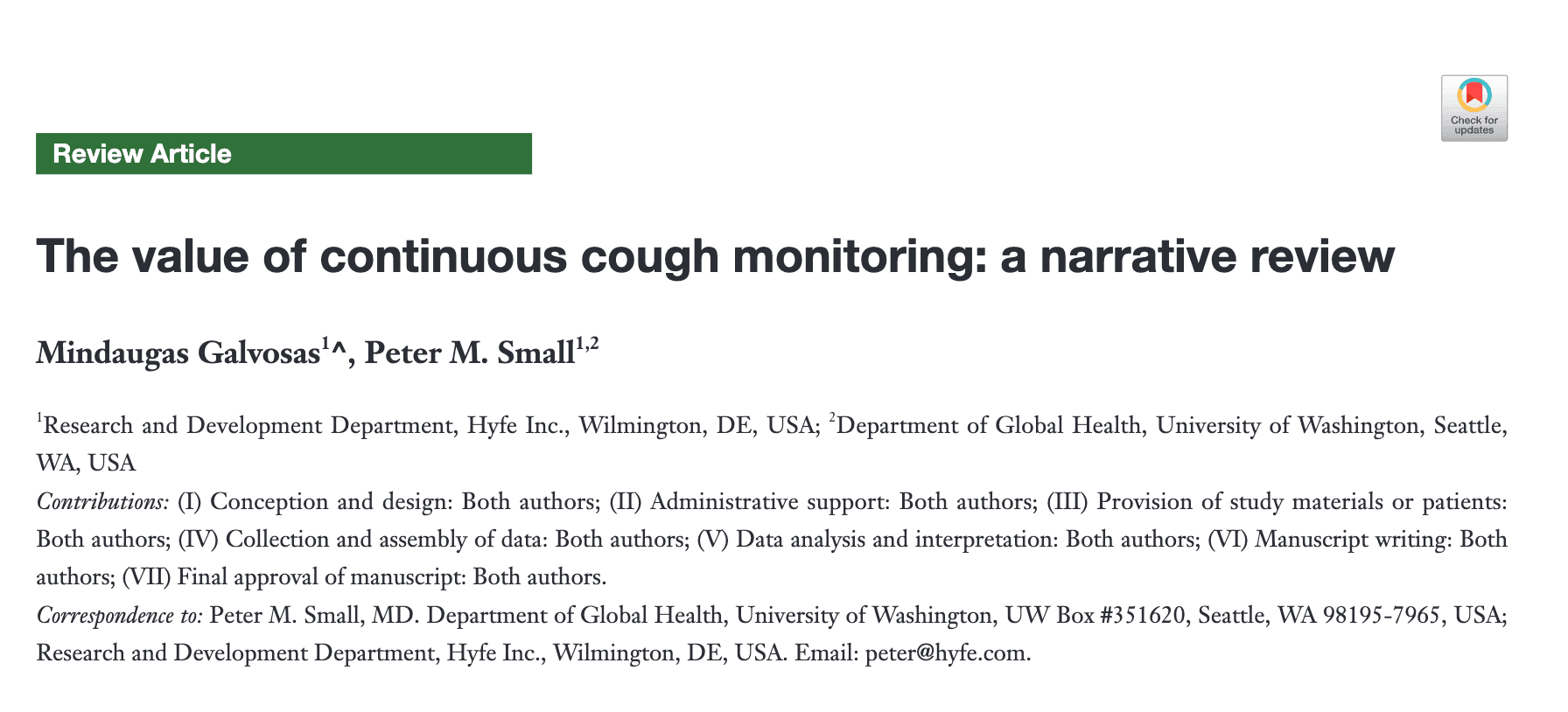
This narrative review by Hyfe's R&D team makes the case that continuous cough monitoring (CCM), powered by acoustic AI, transforms cough from a subjective symptom into a quantifiable digital biomarker.
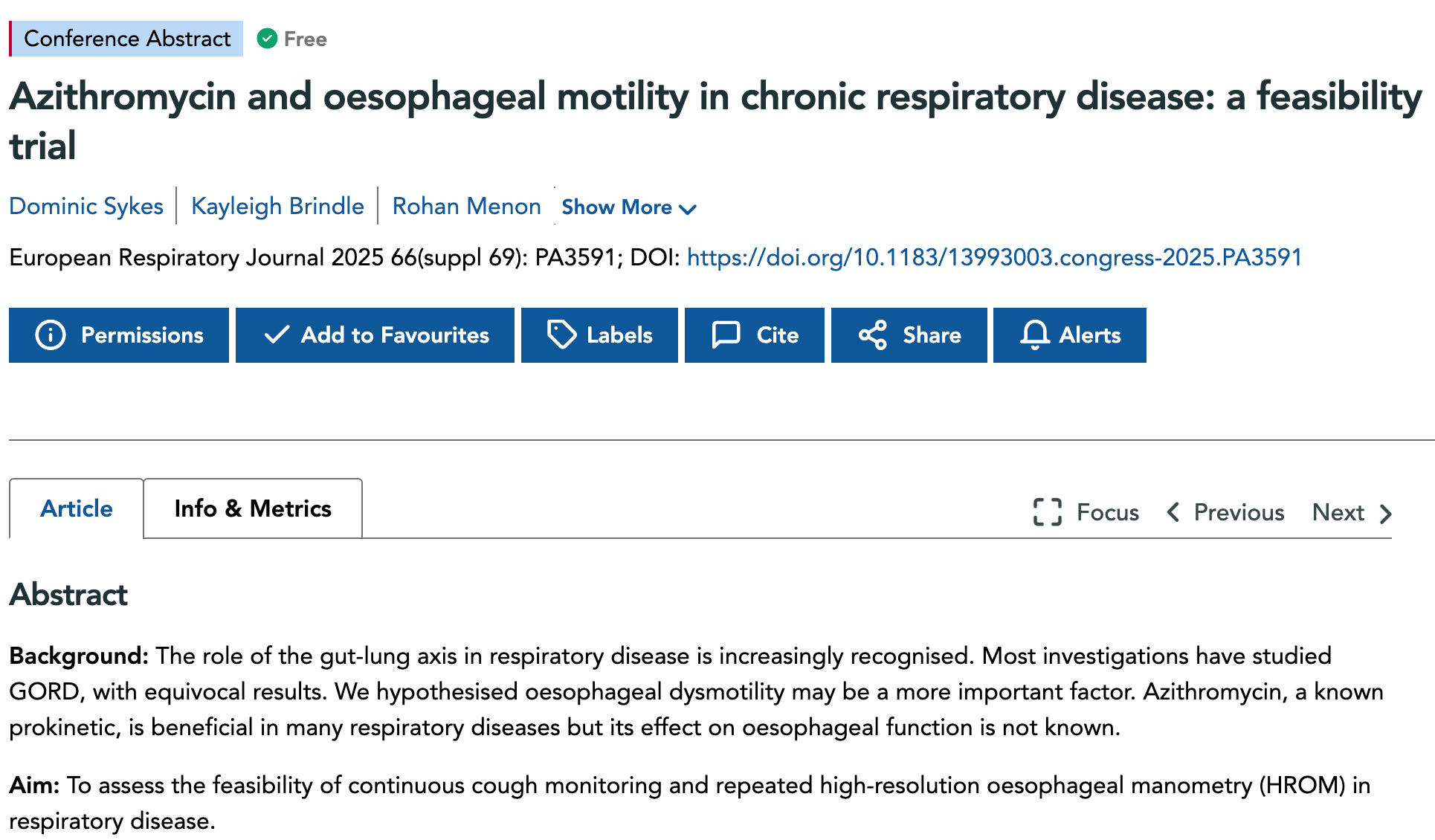
Independent ERS 2025 NeuroCOUGH trial uses the Hyfe Cough Tracker to test feasibility of studying azithromycin's effect on cough and oesophageal motility.
14 May 2025
Accurate measurement of cough frequency is essential for evaluating cough as a symptom, as a disease indicator and as a biomarker in the development of novel therapeutics.The current approach of measuring for 24 hours yields inaccurate estimates in the many subject who have high day to day variability in cough frequency. To determine the optimal duration of monitoring, we used statistical modeling of empiric prolonged cough rate data to assess the trade off between the duration of monitoring and the results accuracy in a population of problematic coughers.
We analyzed real-world data on cough frequency and its variability from a cohort of 30 individuals with problematic cough. Hourly cough counts showed a robust fit to zero-inflated negative binomial (ZINB) distributions. Thus, we used ZINB-based simulations to determine the minimum monitoring duration needed to achieve 80% accuracy in estimating hourly cough frequency.
The red dashed lines delimit the region of main interest - color indicates the duration of monitoring (from short in blue to long in yellow). Most individuals reached accurate cough frequency estimates within a 7-day (168 hours) monitoring period. Subjects with more “metronomic” cough (lower variability, (CV < 1) required fewer days, while those with highly variable cough (CV > 1.65) needed closer to 8 days for reliable data. Across all profiles, 7 days was sufficient to capture accurate cough frequency for 83% of participants, suggesting it as a pragmatic balance between statistical accuracy and operational feasibility.
A 7-day monitoring duration provides a robust, standardized timeframe for assessing cough frequency in clinical studies, offering a significant improvement over the traditional 24-hour period. This duration captures inter- and intra-individual cough variability, enhancing the accuracy of cough-related endpoints in research as well as variation that may result from daily habits. While future work may explore tailored monitoring durations for specific populations, a 7-day period is recommended as the default for most studies involving cough frequency assessment.