53
Research Trials
20
Peer-reviewed publications
16
Clinical Conditions

Hyfe pilot study tests a digital therapeutic combining passive cough monitoring with behavioral suppression techniques delivered through the CoughPro app.

This narrative review by Hyfe's R&D team makes the case that continuous cough monitoring (CCM), powered by acoustic AI, transforms cough from a subjective symptom into a quantifiable digital biomarker.
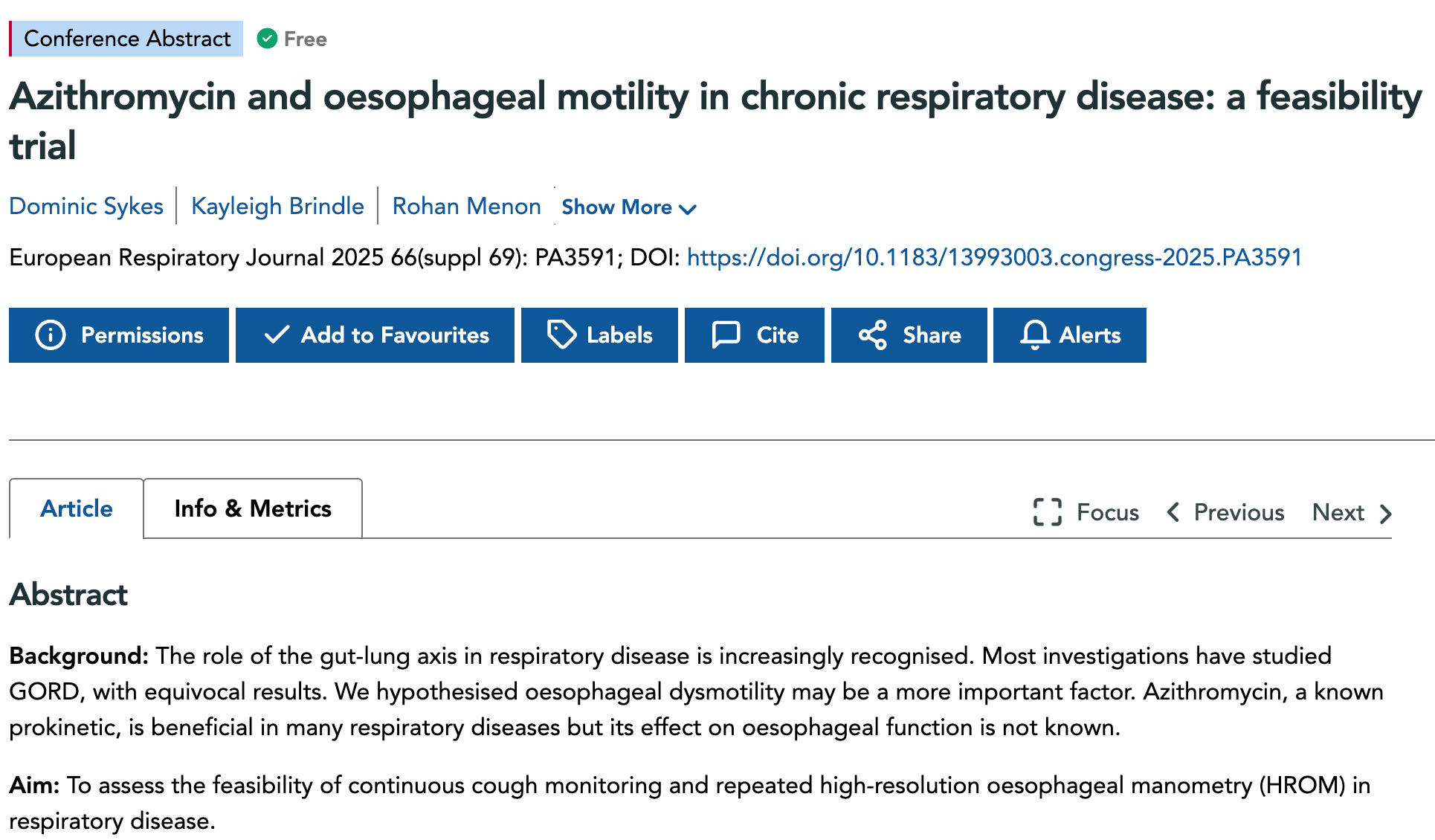
Independent ERS 2025 NeuroCOUGH trial uses the Hyfe Cough Tracker to test feasibility of studying azithromycin's effect on cough and oesophageal motility.
13 February 2024
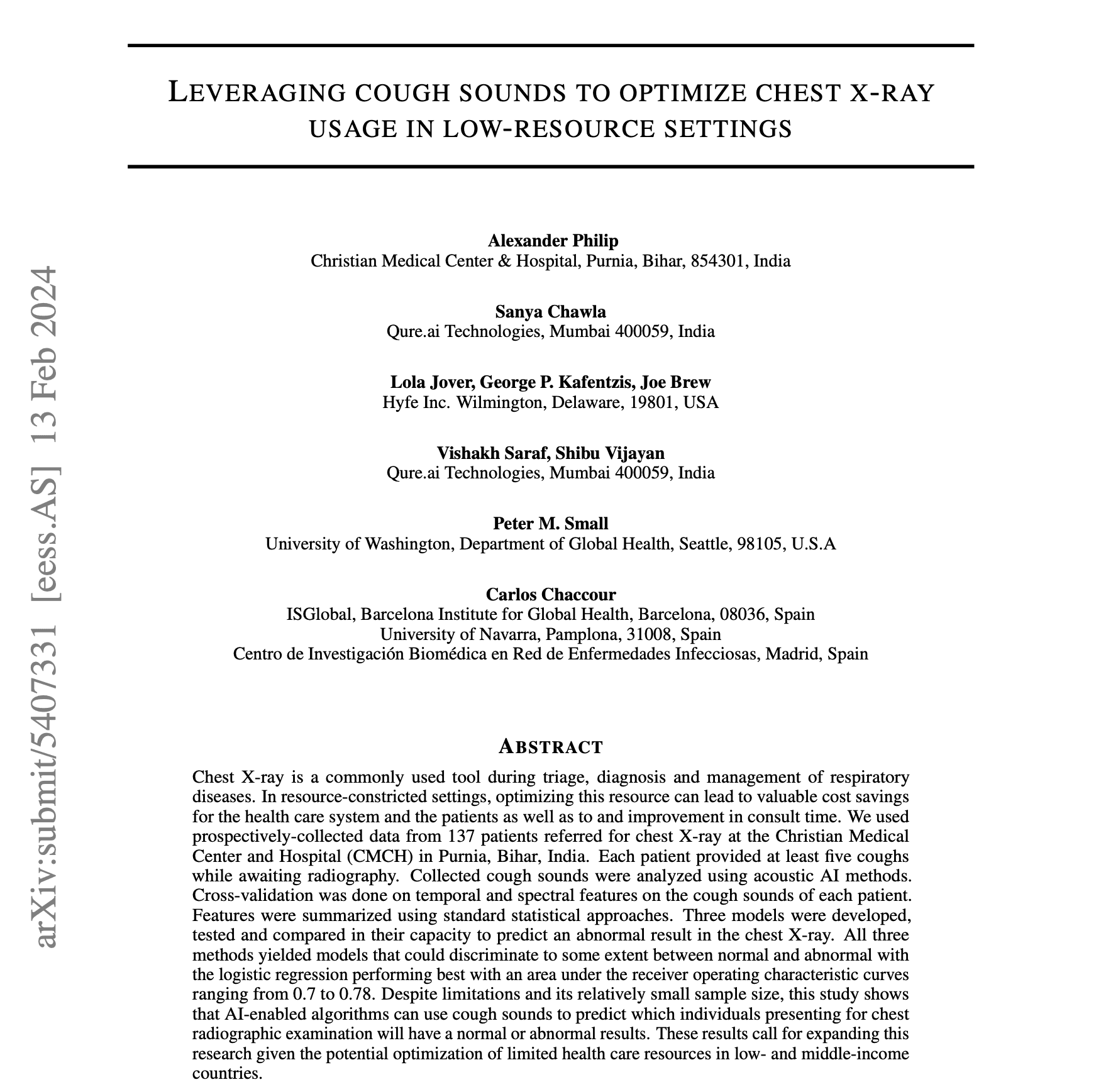
Chest X-ray is a commonly used tool during triage, diagnosis and management of respiratory diseases. In resource-constricted settings, optimizing this resource can lead to valuable cost savings for the health care system and the patients as well as to and improvement in consult time. We used prospectively-collected data from 137 patients referred for chest X-ray at the Christian Medical Center and Hospital (CMCH) in Purnia, Bihar, India. Each patient provided at least five coughs while awaiting radiography. Collected cough sounds were analyzed using acoustic AI methods. Cross-validation was done on temporal and spectral features on the cough sounds of each patient.
Features were summarized using standard statistical approaches. Three models were developed, tested and compared in their capacity to predict an abnormal result in the chest X-ray. All three methods yielded models that could discriminate to some extent between normal and abnormal with the logistic regression performing best with an area under the receiver operating characteristic curves ranging from 0.7 to 0.78. Despite limitations and its relatively small sample size, this study shows that AI-enabled algorithms can use cough sounds to predict which individuals presenting for chest radiographic examination will have a normal or abnormal results. These results call for expanding this research given the potential optimization of limited health care resources in low- and middle-income countries.