64
Research Trials
29
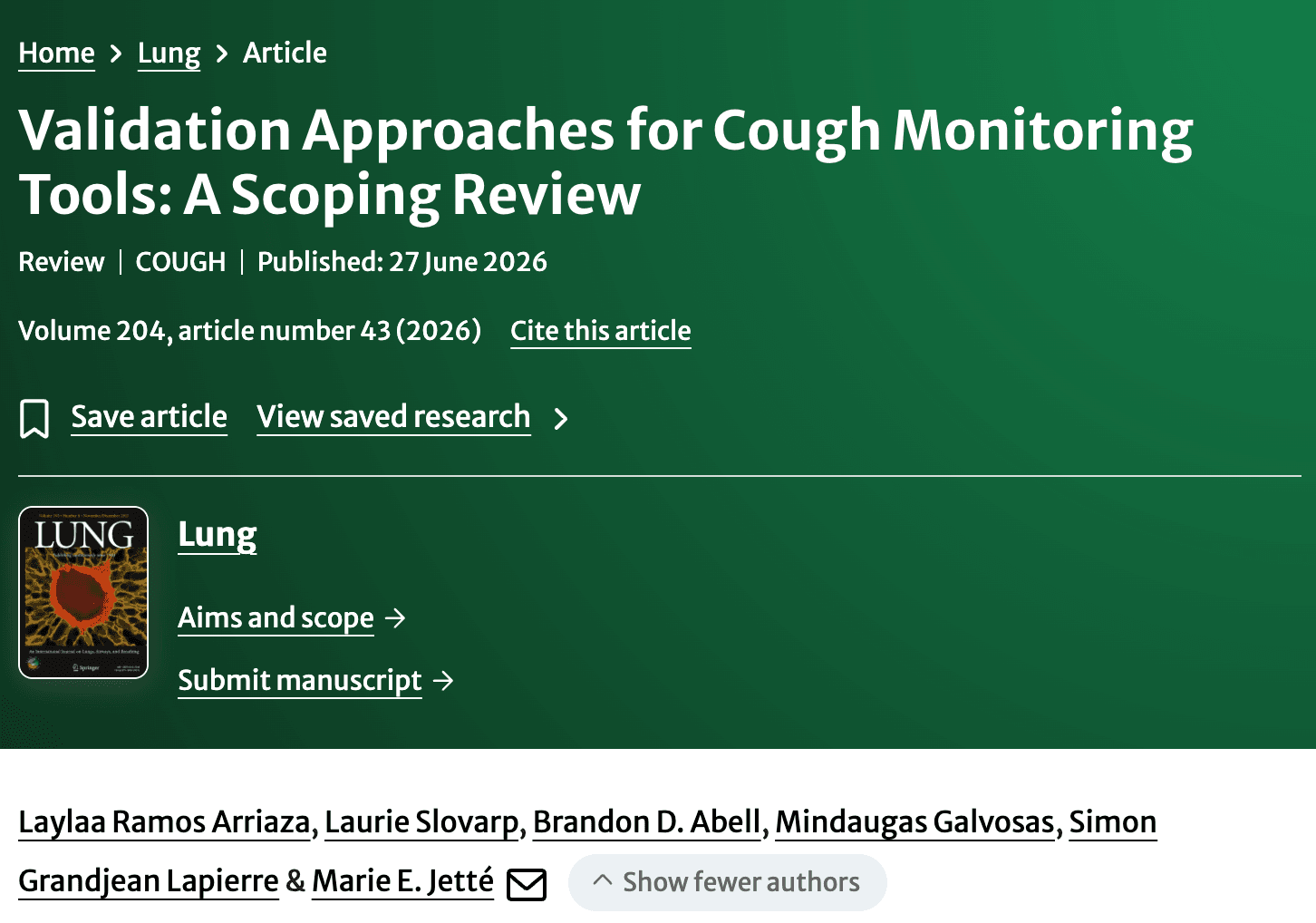
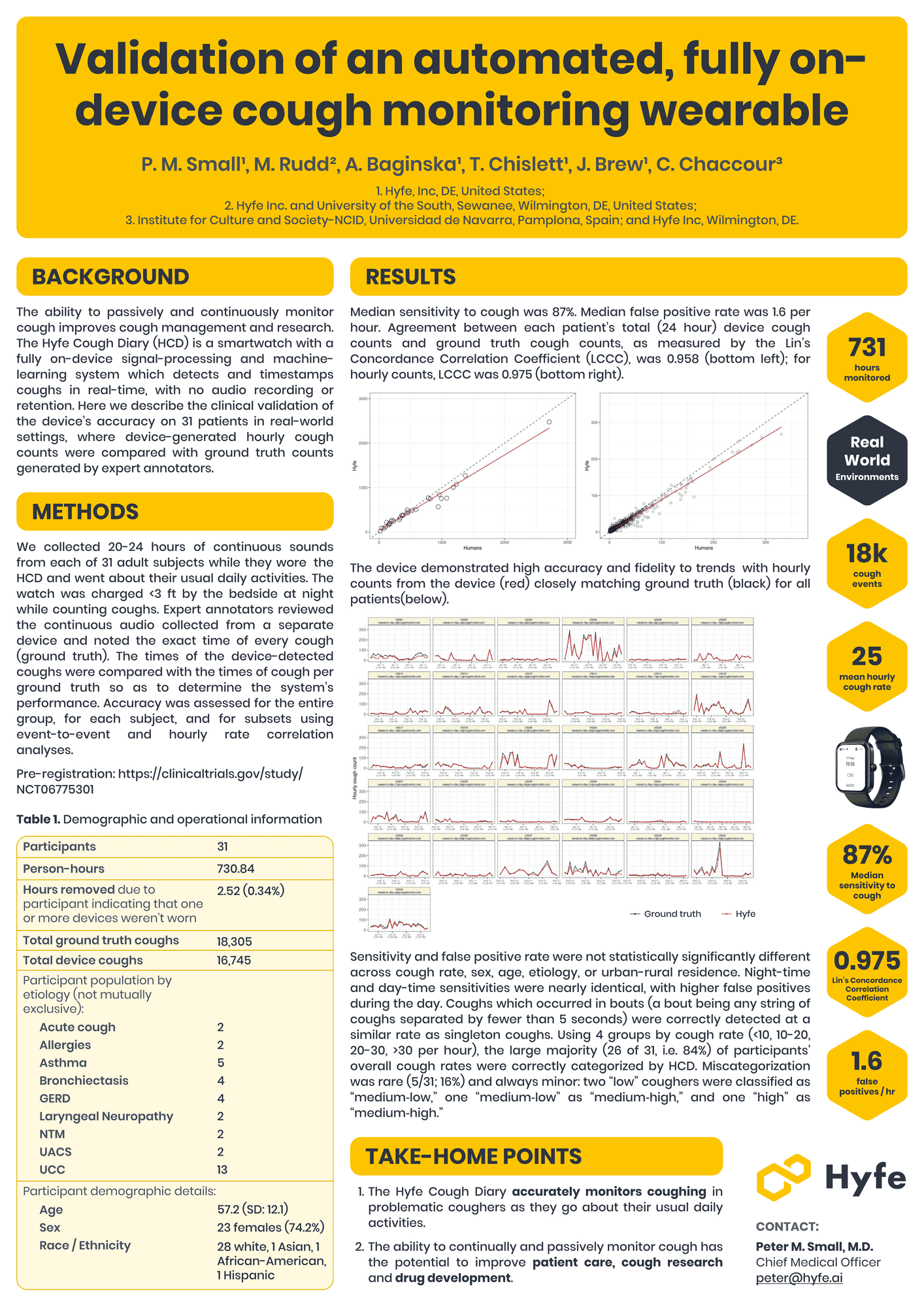
Peer-reviewed publications
17
Clinical Conditions
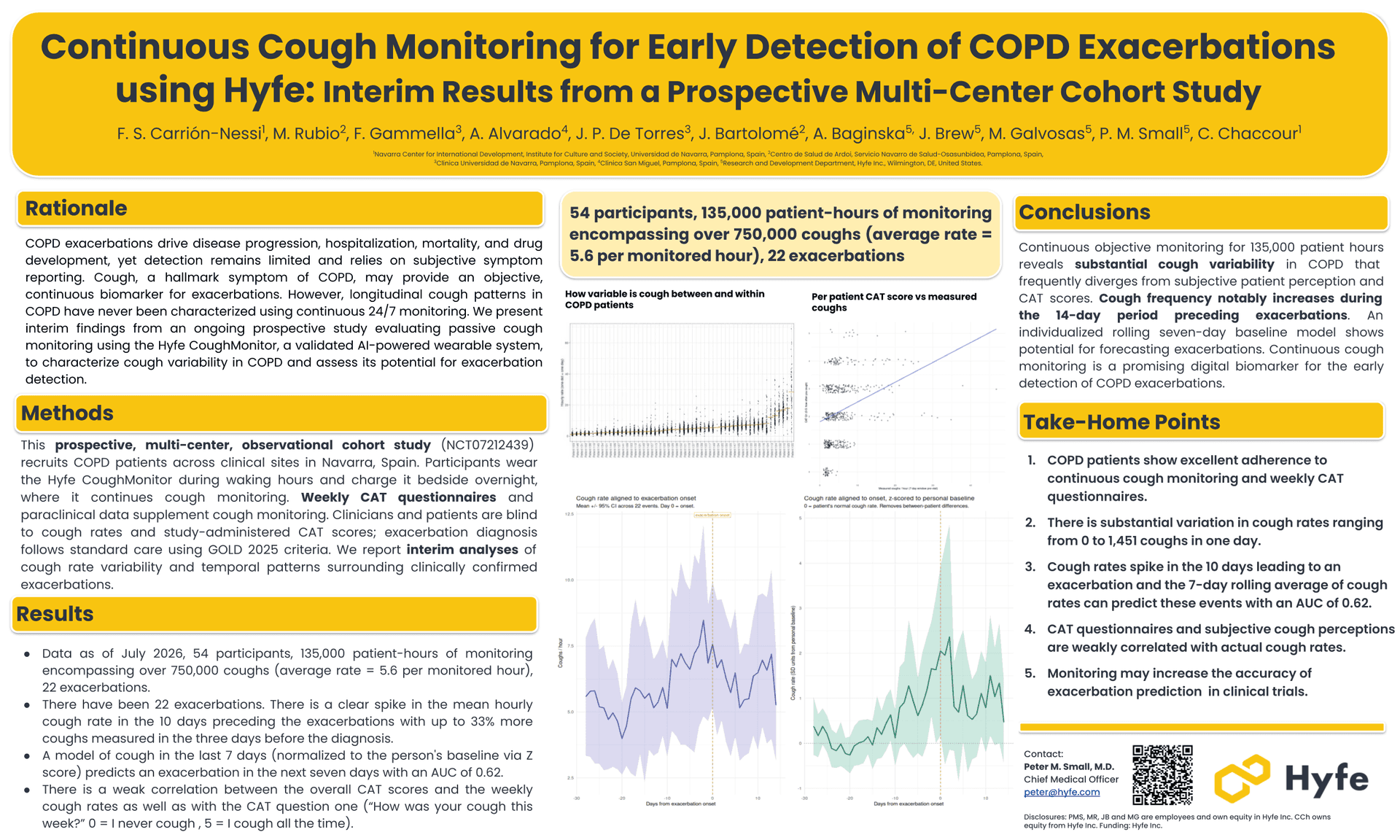
Updated interim data from 54 COPD patients and 135,000 monitored hours, showing cough rates rise in the days before exacerbations and correlate only weakly with CAT scores.
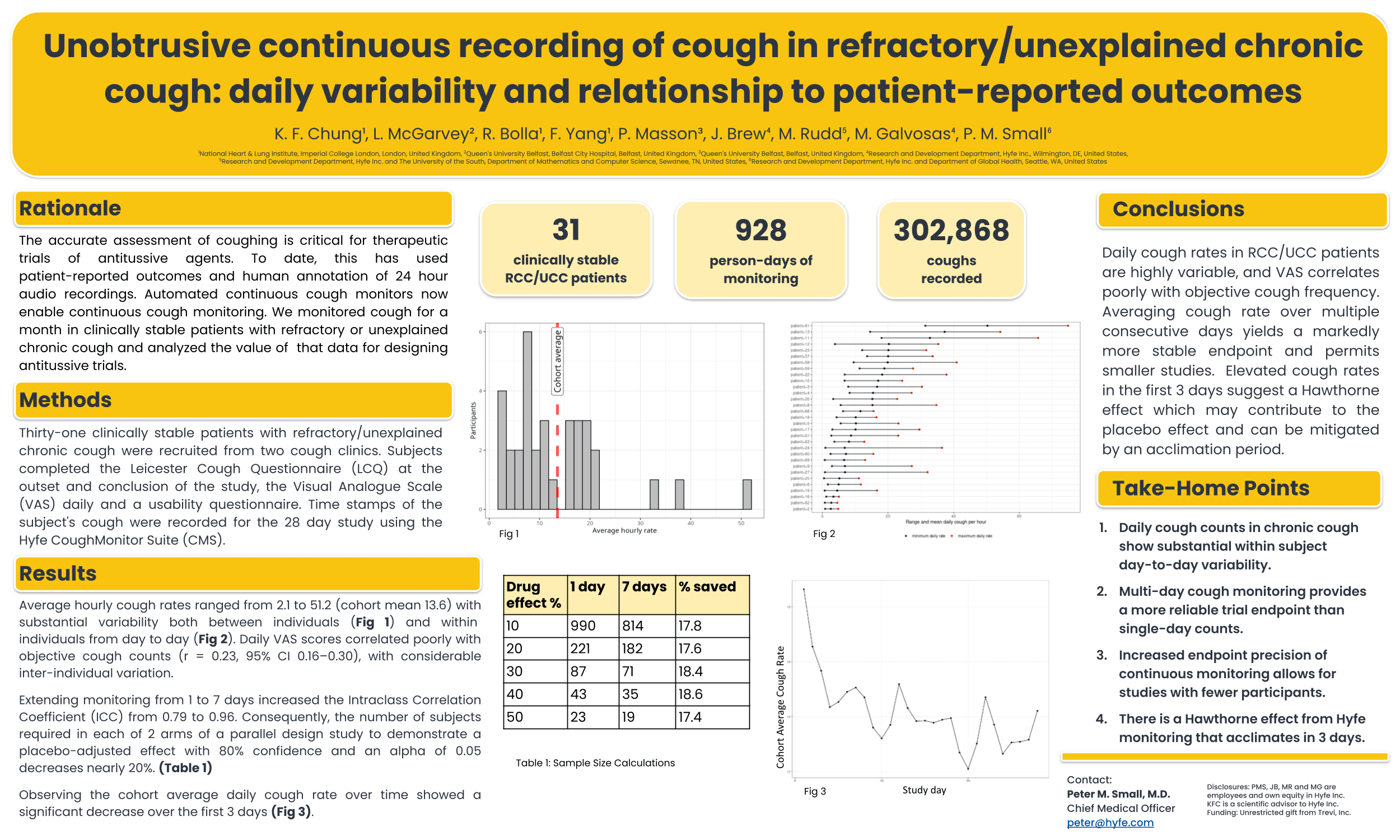
A month of continuous monitoring in stable chronic cough shows that multi-day averaging makes cough frequency a more reliable trial endpoint, allowing smaller studies, and reveals a short-lived Hawthorne effect.
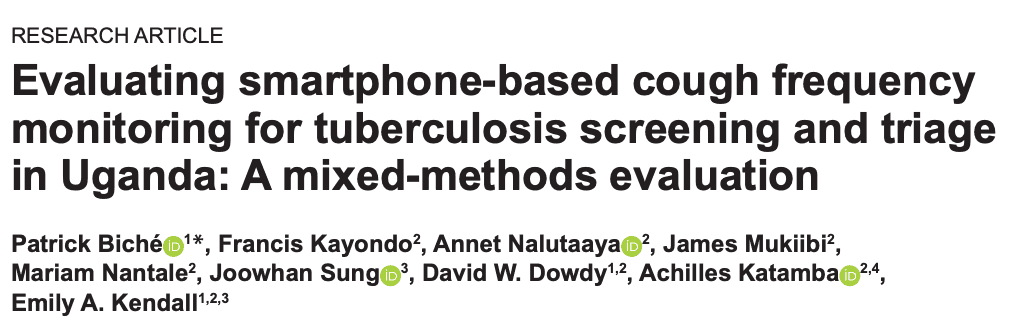
Mixed-methods study in Kampala assessing 48-hour cough frequency monitoring with the Hyfe Research app for TB screening and triage, alongside staff-reported implementation barriers.
18 November 2025 · ERS Congress 2025

Continuous cough monitoring is only as useful as the time a participant actually wears the device, making objective adherence measurement a prerequisite for trustworthy trial endpoints. This ERS 2025 abstract from Hyfe's R&D team validates the wear-detection algorithm built into the Hyfe CoughMonitor smartwatch against participant-reported wear status across 418 person-hours of data in ten participants. Applying the established Choi accelerometer algorithm, the system classified wear versus non-wear with 94.6% sensitivity and 93.8% specificity, with a positive predictive value for non-wear of 95.5% and a negative predictive value for wear of 92.5%. The CoughMonitor Suite dashboard surfaced these adherence signals in real time, giving study teams a device-verified alternative to self-report. The findings support the smartwatch's use in clinical trials where objective cough dynamics depend on knowing, with confidence, when the device was actually being worn.
Bring objective cough data to your study. Schedule a meeting →