53
Research Trials
20
Peer-reviewed publications
16
Clinical Conditions
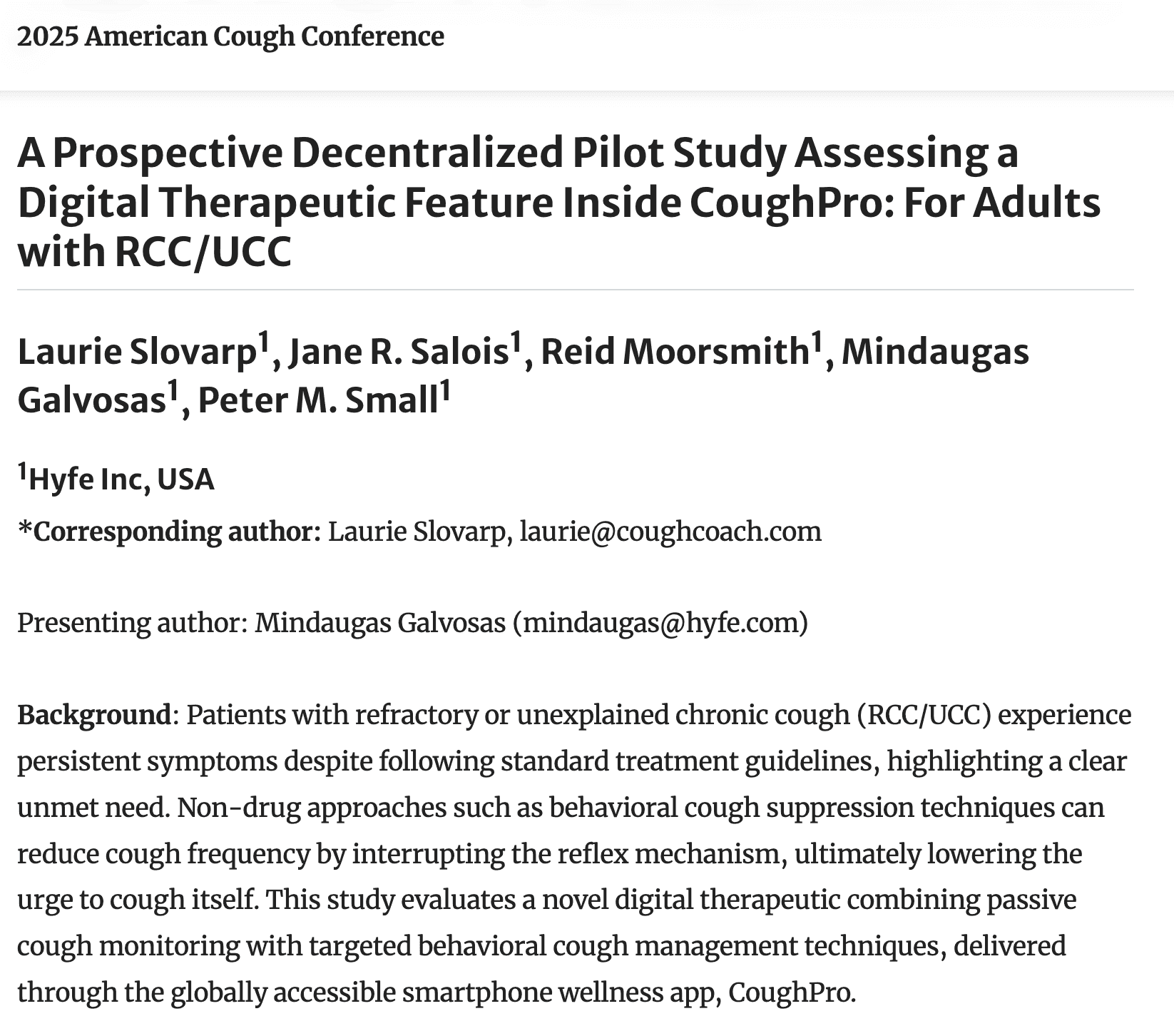
Hyfe pilot study tests a digital therapeutic combining passive cough monitoring with behavioral suppression techniques delivered through the CoughPro app.
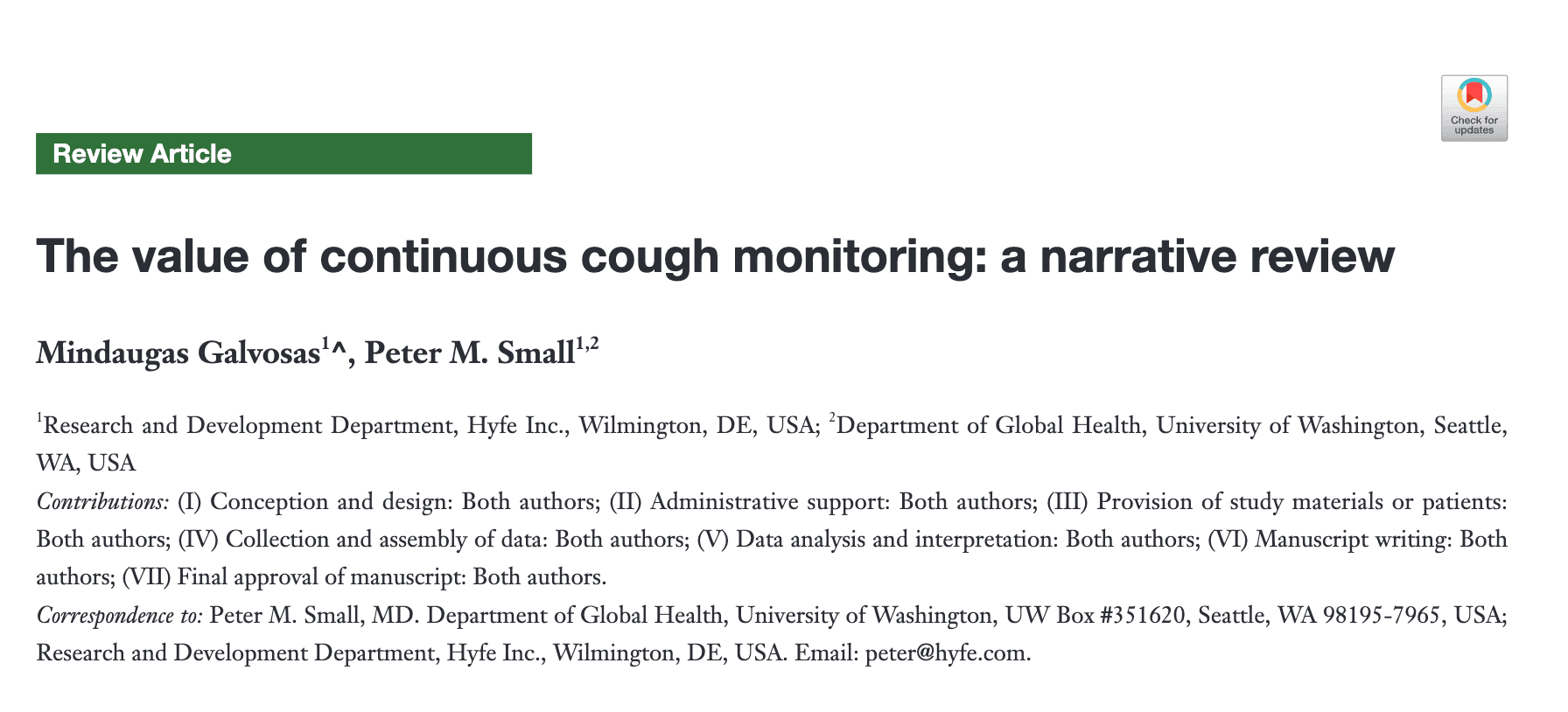
This narrative review by Hyfe's R&D team makes the case that continuous cough monitoring (CCM), powered by acoustic AI, transforms cough from a subjective symptom into a quantifiable digital biomarker.
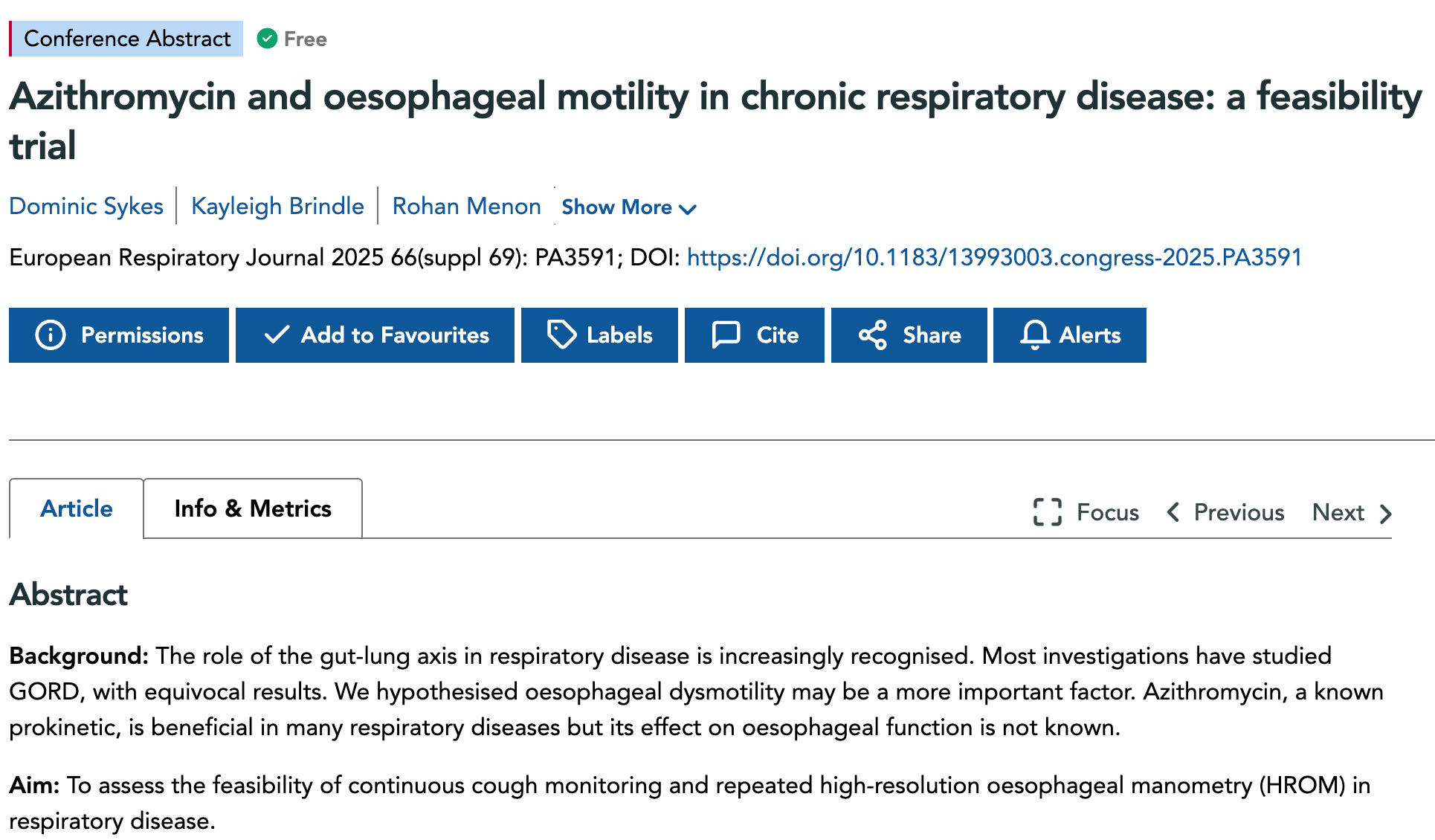
Independent ERS 2025 NeuroCOUGH trial uses the Hyfe Cough Tracker to test feasibility of studying azithromycin's effect on cough and oesophageal motility.
30 July 2025

Background: the role of the gut-lung axis in respiratory disease is increasingly recognised. Much emphasis has been placed on gastro-oesophageal reflux disease; however, oesophageal dysmotility may also play a significant role. Azithromycin, a known prokinetic, has been shown to be of major benefit in a number of respiratory diseases, but the relationship between oesophageal function and the lung has not been examined.
Objectives: the study team assessed the feasibility of performing continuous cough monitoring and repeated high-resolution oesophageal manometry (HROM) in patients with chronic respiratory disease.
Design: the study team conducted an open-label, single-arm, feasibility trial.
Methods: Azithromycin 250 mg once daily was given to patients with chronic respiratory disease who reported a chronic cough. All participants were monitored continually for at least 1 week prior to and 4 weeks after azithromycin with the Hyfe CoughMonitor smartwatch. Participants also had HROM performed at two time-points, immediately before and 4 weeks after initiation of azithromycin. Feasibility outcomes pertaining to recruitment, data quality, and acceptability of trial processes were assessed. Exploratory outcome data for metrics of oesophageal function were also analysed.
Results: A total of 30 participants (57% female, mean age 65.2 (SD = 11.3)) were recruited over a 10-month period, giving a recruitment rate of three patients per month in a single centre. A total of 87% (n = 26) of participants completed all three study visits. All pre-specified data quality outcomes met their ‘green’ traffic light stop-go criteria. HROM demonstrated that the majority (52%) of participants had abnormal oesophageal function, as defined by the Chicago Classification, at baseline. Changes in oesophageal function were not significantly associated with changes in objective or subjective cough measures, except for a weakly negative correlation with the Hull Airway Reflux Questionnaire score.
This study explores the connection between gullet function and cough, particularly in patients with chronic respiratory diseases. It focuses on azithromycin, a medication known to improve many different respiratory conditions. The researchers conducted a trial involving 30 patients who experienced chronic cough. They monitored patients’ coughs continuously using Hyfe's cough monitoring smartwatch and assessed their oesophageal function using a specialized test both before and after starting azithromycin. As oesophageal testing is known to be an invasive procedure, it was vital that the acceptability to patients of this procedure was tested. The trial showed that it is feasible to conduct this type of research, as most participants completed the study and reported that they were not put off by the investigation. The results of this study suggest that a larger clinical trial is required.