53
Research Trials
20
Peer-reviewed publications
16
Clinical Conditions
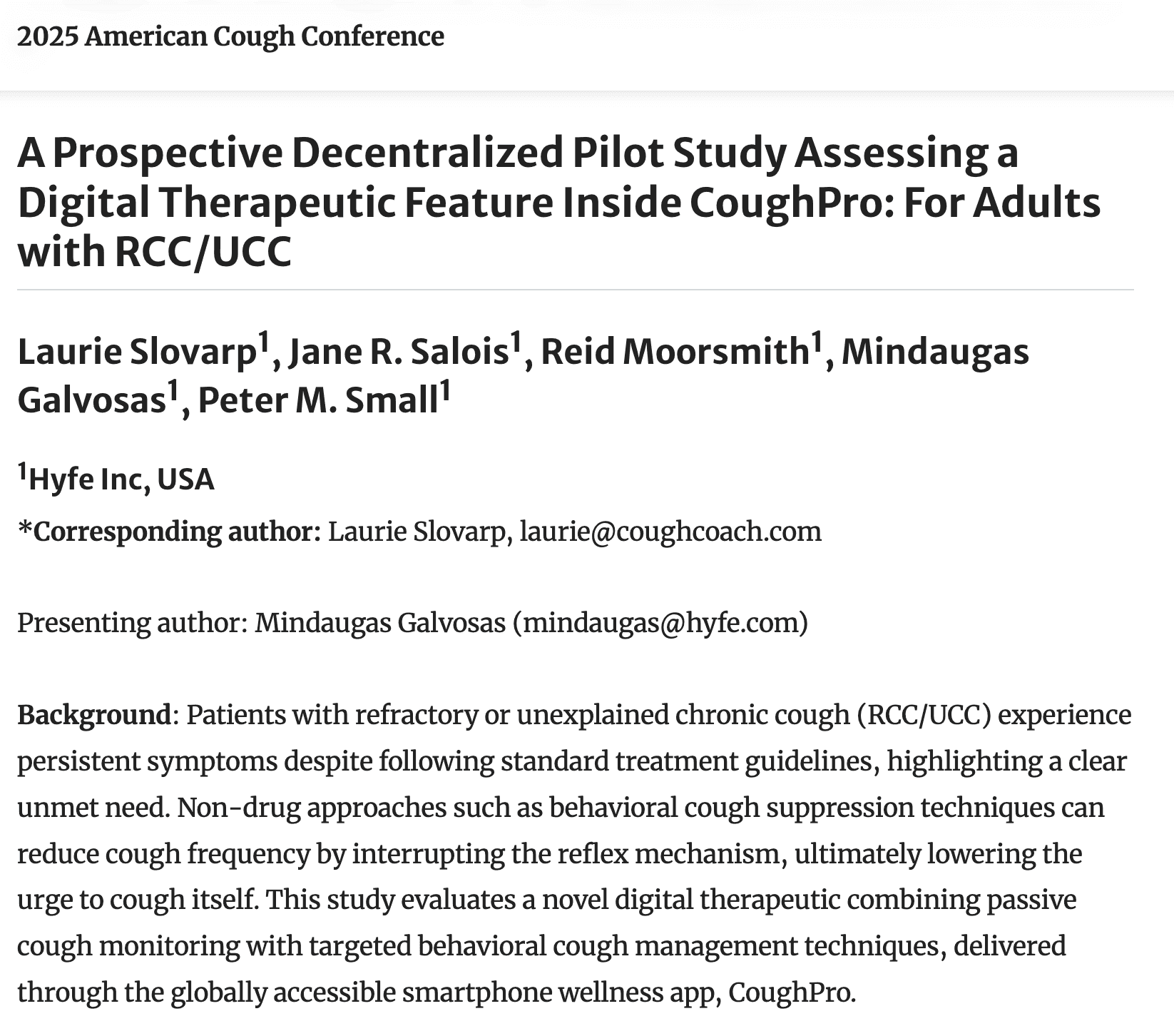
Hyfe pilot study tests a digital therapeutic combining passive cough monitoring with behavioral suppression techniques delivered through the CoughPro app.
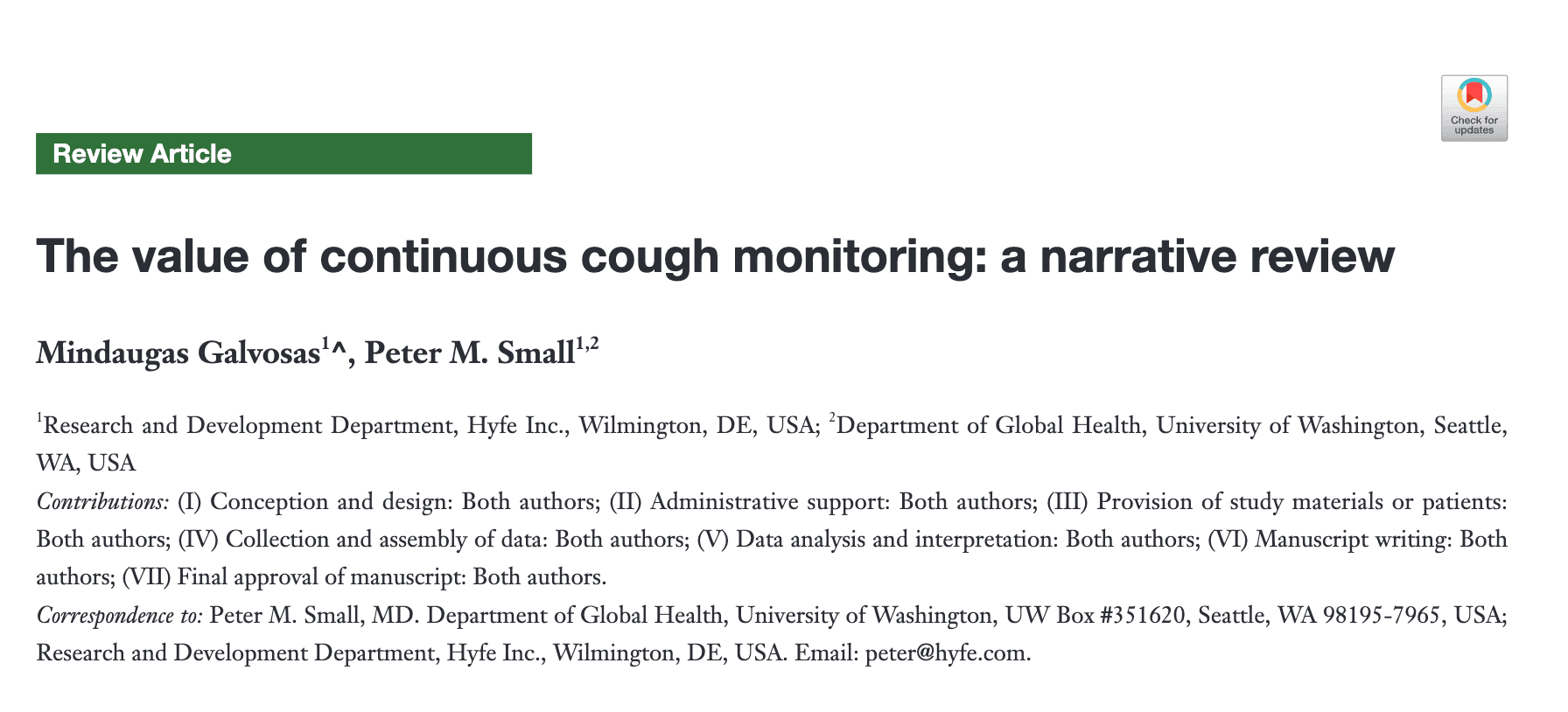
This narrative review by Hyfe's R&D team makes the case that continuous cough monitoring (CCM), powered by acoustic AI, transforms cough from a subjective symptom into a quantifiable digital biomarker.
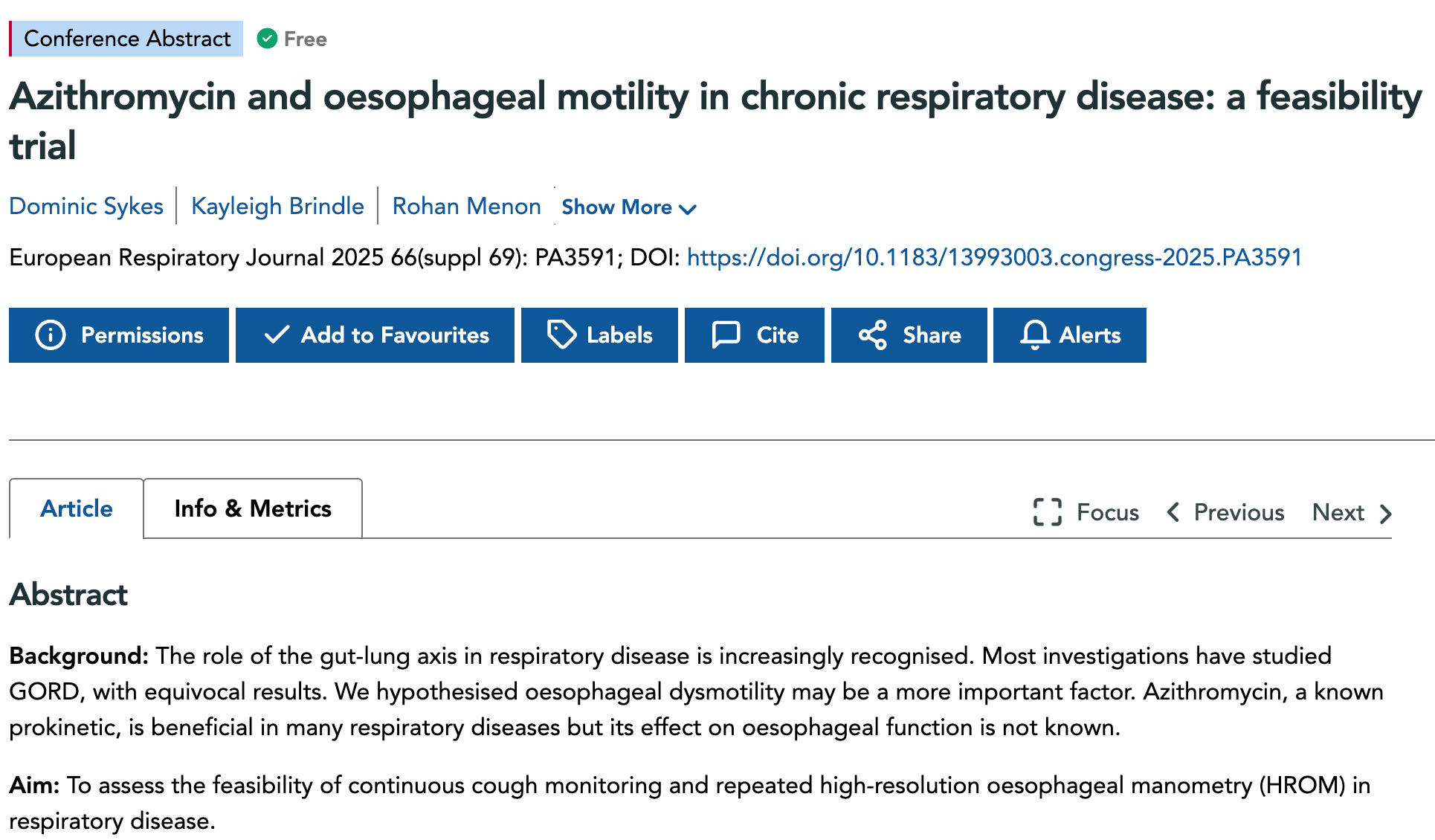
Independent ERS 2025 NeuroCOUGH trial uses the Hyfe Cough Tracker to test feasibility of studying azithromycin's effect on cough and oesophageal motility.
1 October 2024
Background:
The hydration status of surface liquid in the larynx and trachea may regulate peripheral cough receptors.
Hypothesis:
Topical hypertonic divalent salts (HDS) buffered to alkalinity provides relief for refractory chronic cough.
We conducted an exploratory, single-blinded controlled study in 12 chronic cough patients to examine cough-suppression efficacy of a nasally delivered HDS composition (SC001) at pH 8 or pH 9, compared to a normal saline (NS) control. Subjects were monitored continuously using the Hyfe CoughMonitor smartwatch for one week of baseline, one week of NS, and one week of SC001.
Baseline cough rates ranged from 4 to 41 coughs/hr with a mean visual analog score (VAS) of 65±17. Adjusting for control, SC001 demonstrated efficacy at suppressing cough by 15% from Day 1 (p=0.015) and 23% from Day 3 (p=0.002) overall (n=12). Efficacy was highest in subjects treated with SC001 pH 9 (n=5), with a 25% cough-suppression observed from Day 1 (p=0.03) and 35% from Day 3 (p=0.02). Lower efficacy was observed for SC001 pH 8 (n=7), with 9% (p=0.08) and 16% (p=0.02) suppression observed from Day 1 and Day 3 respectively. Hourly cough counts correlated with VAS scores (ρ = 0.266, p-value = 0.015) at baseline and increased with treatment (ρ = 0.507, p-value = 0.000002). No adverse events were reported.
Alkaline (pH 9) HDS aerosol is a promising treatment for refractory chronic cough.