62
Research Trials
22
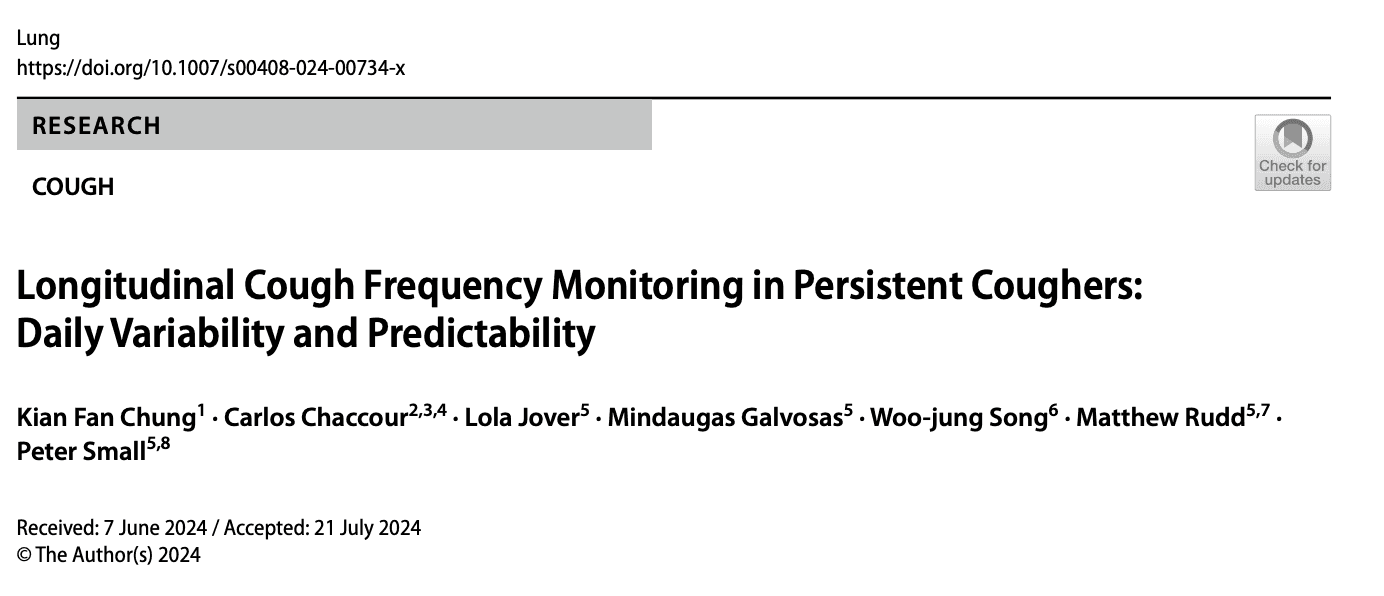
Peer-reviewed publications
17
Clinical Conditions
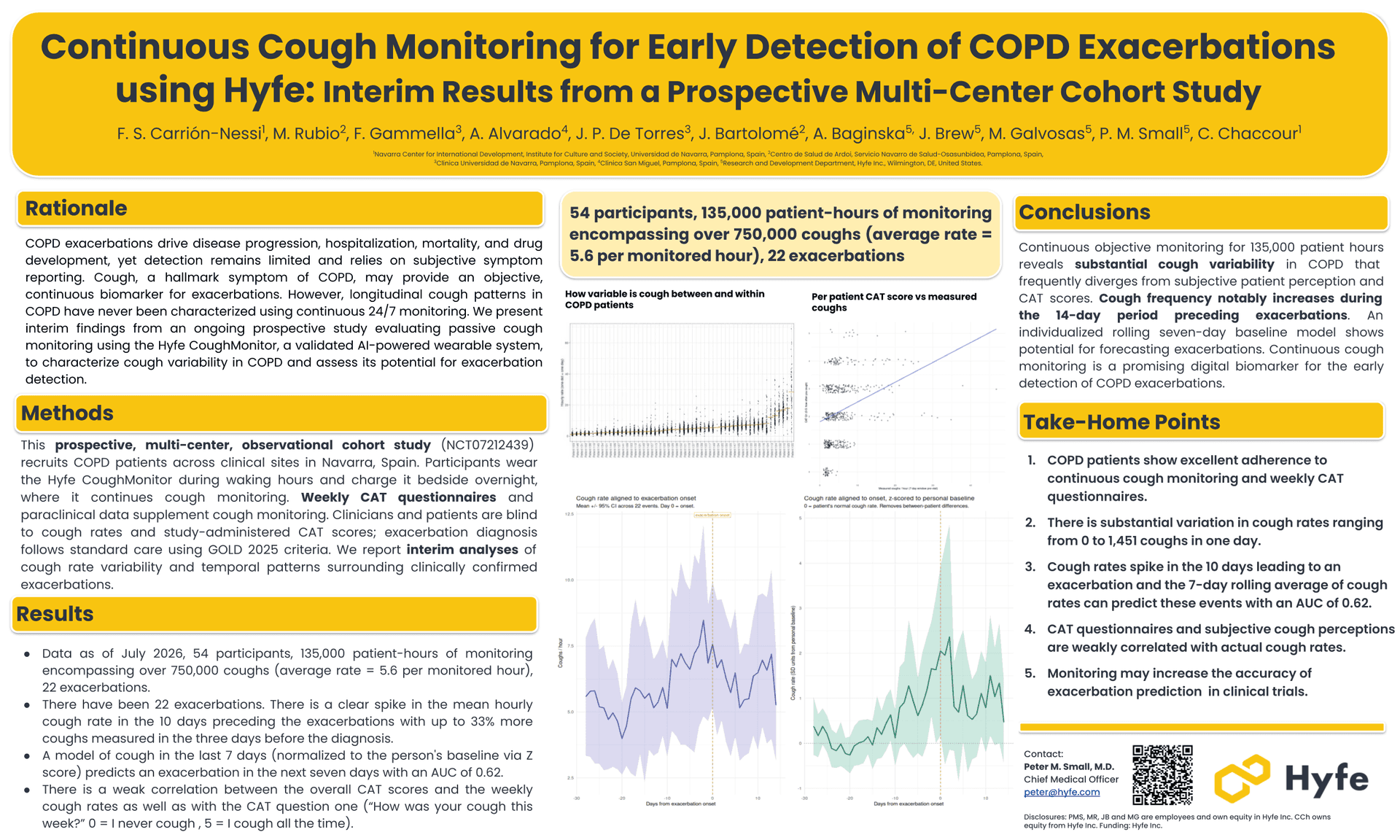
Updated interim data from 54 COPD patients and 135,000 monitored hours, showing cough rates rise in the days before exacerbations and correlate only weakly with CAT scores.
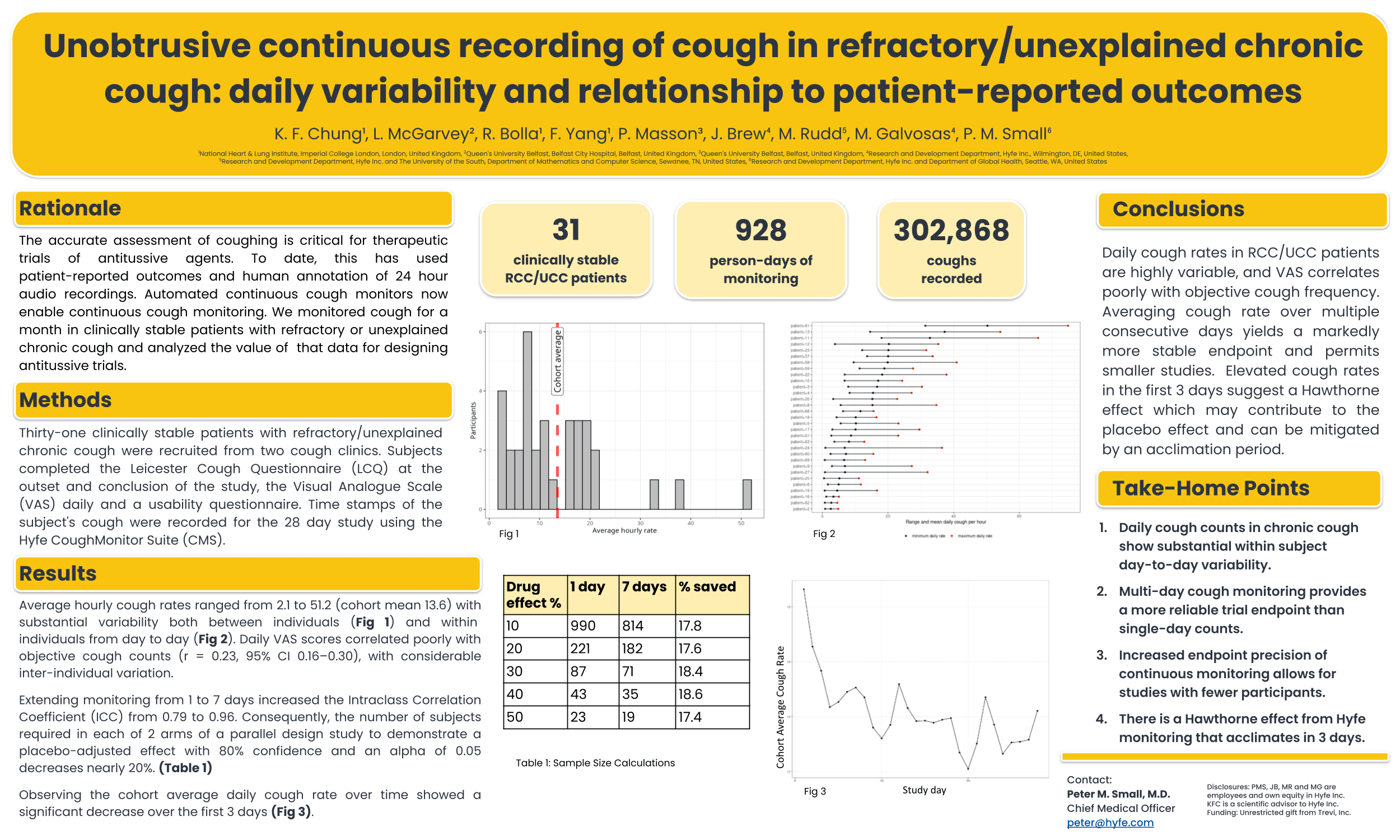
A month of continuous monitoring in stable chronic cough shows that multi-day averaging makes cough frequency a more reliable trial endpoint, allowing smaller studies, and reveals a short-lived Hawthorne effect.
Mixed-methods study in Kampala assessing 48-hour cough frequency monitoring with the Hyfe Research app for TB screening and triage, alongside staff-reported implementation barriers.
15 September 2026
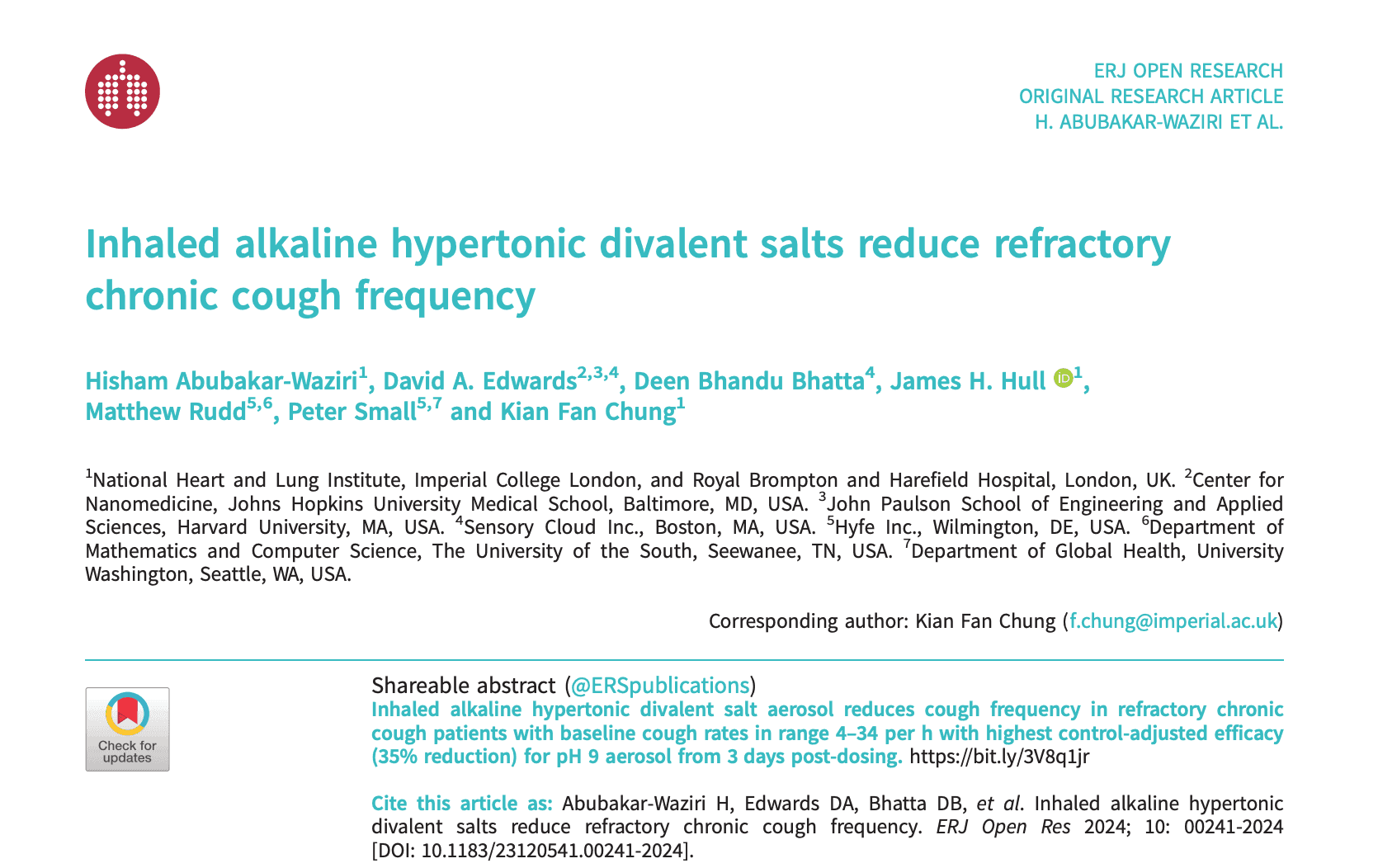
Rising temperatures and atmospheric dryness are increasingly linked to worse respiratory symptoms. This study combined modelling, cell experiments and a clinical trial to test whether heatwave conditions promote cough hypersensitivity, and whether inhaled alkaline hypertonic divalent salts (HDS) can reverse it.
In human bronchial epithelial cell cultures, prolonged exposure to hot, dry air collapsed the airway mucus layer and increased expression of genes associated with cough hypersensitivity, including TRPV4 and PIEZO1. Alkaline (pH 9) magnesium-based HDS aerosols rehydrated the airway surface for more than three hours, longer than lower-pH formulations or hypertonic saline.
In REACH, a randomized, placebo-controlled pilot trial in refractory chronic cough patients in Riyadh, cough was monitored continuously with a Hyfe smartwatch. In a post-hoc analysis of six participants, two weeks of pH 9 HDS reduced cough bout rate by 59% relative to placebo, and the effect persisted after treatment ended. The findings are preliminary and need confirmation in larger trials. Hyfe’s Matthew Rudd and Peter Small contributed insights into the cough bout analysis.