62
Research Trials
22
Peer-reviewed publications
17
Clinical Conditions
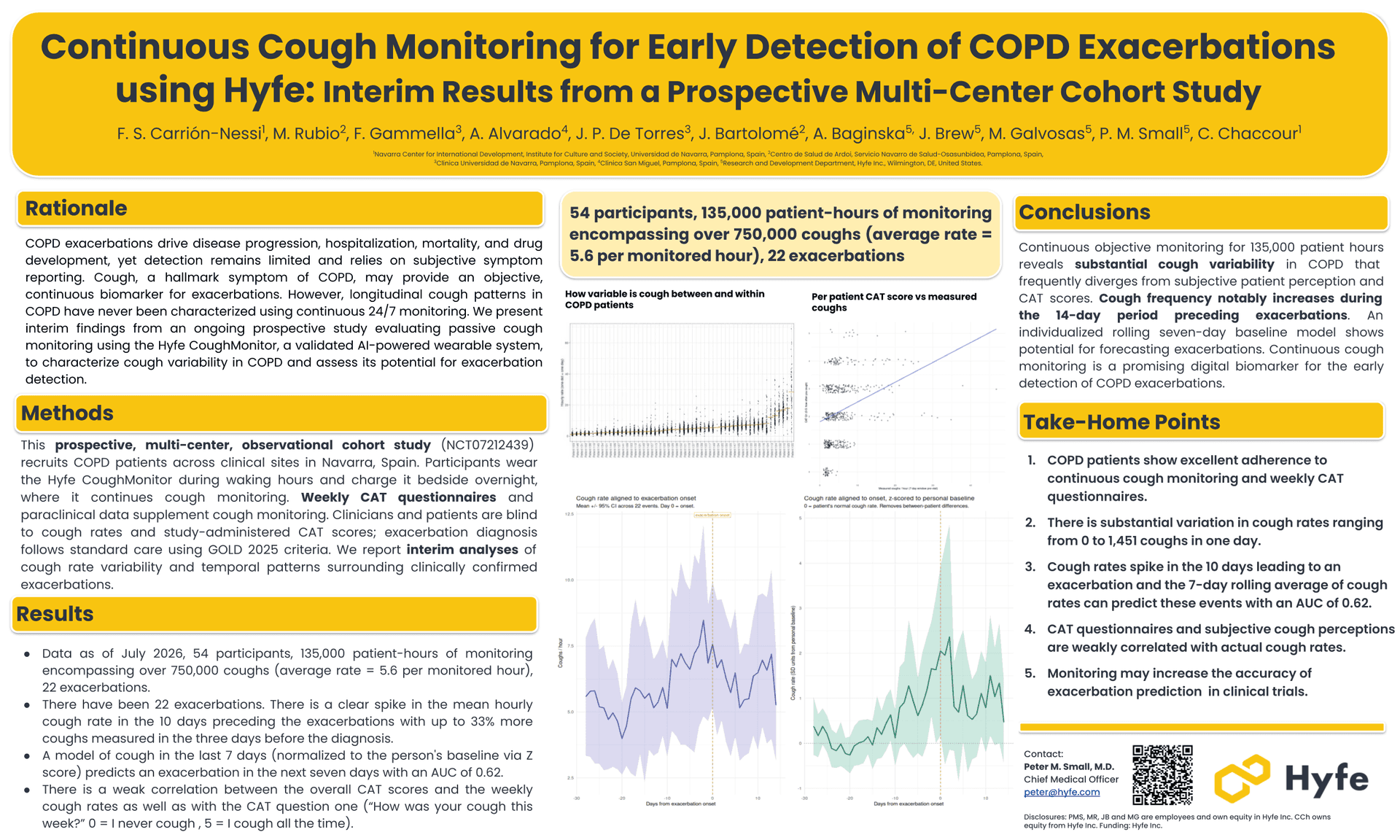
Updated interim data from 54 COPD patients and 135,000 monitored hours, showing cough rates rise in the days before exacerbations and correlate only weakly with CAT scores.
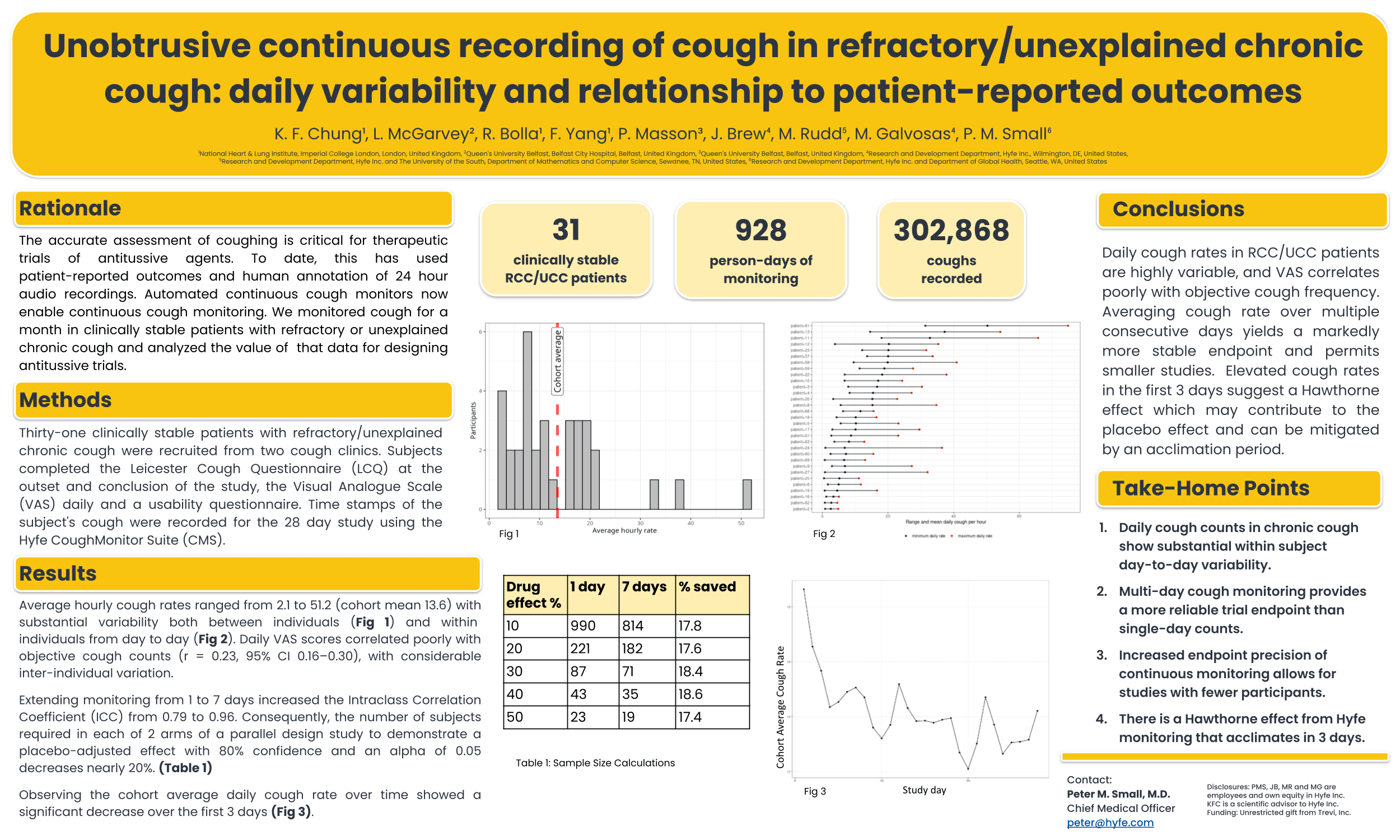
A month of continuous monitoring in stable chronic cough shows that multi-day averaging makes cough frequency a more reliable trial endpoint, allowing smaller studies, and reveals a short-lived Hawthorne effect.
Mixed-methods study in Kampala assessing 48-hour cough frequency monitoring with the Hyfe Research app for TB screening and triage, alongside staff-reported implementation barriers.
28 October 2026
This updated interim analysis of the COPD-HYFE study (NCT07212439) covers 54 participants monitored continuously with the Hyfe CoughMonitor in Navarra, Spain. That’s over 135,000 patient-hours, more than 750,000 coughs and 22 clinically confirmed exacerbations.
Cough frequency varied widely, from 0 to over 1,400 coughs in a single day. Mean cough rates rose in the days before exacerbations, with up to 33% more coughs in the three days before diagnosis. A model using each patient’s last seven days of cough, normalized to their own baseline, predicted exacerbations in the following week with an AUC of 0.62. Weekly CAT scores and patients’ own cough ratings correlated only weakly with measured cough. The findings support continuous cough monitoring as a promising digital biomarker for early exacerbation detection. This work was also presented at the ERS Cough Conference 2026 in London.