62
Research Trials
22
Peer-reviewed publications
17
Clinical Conditions
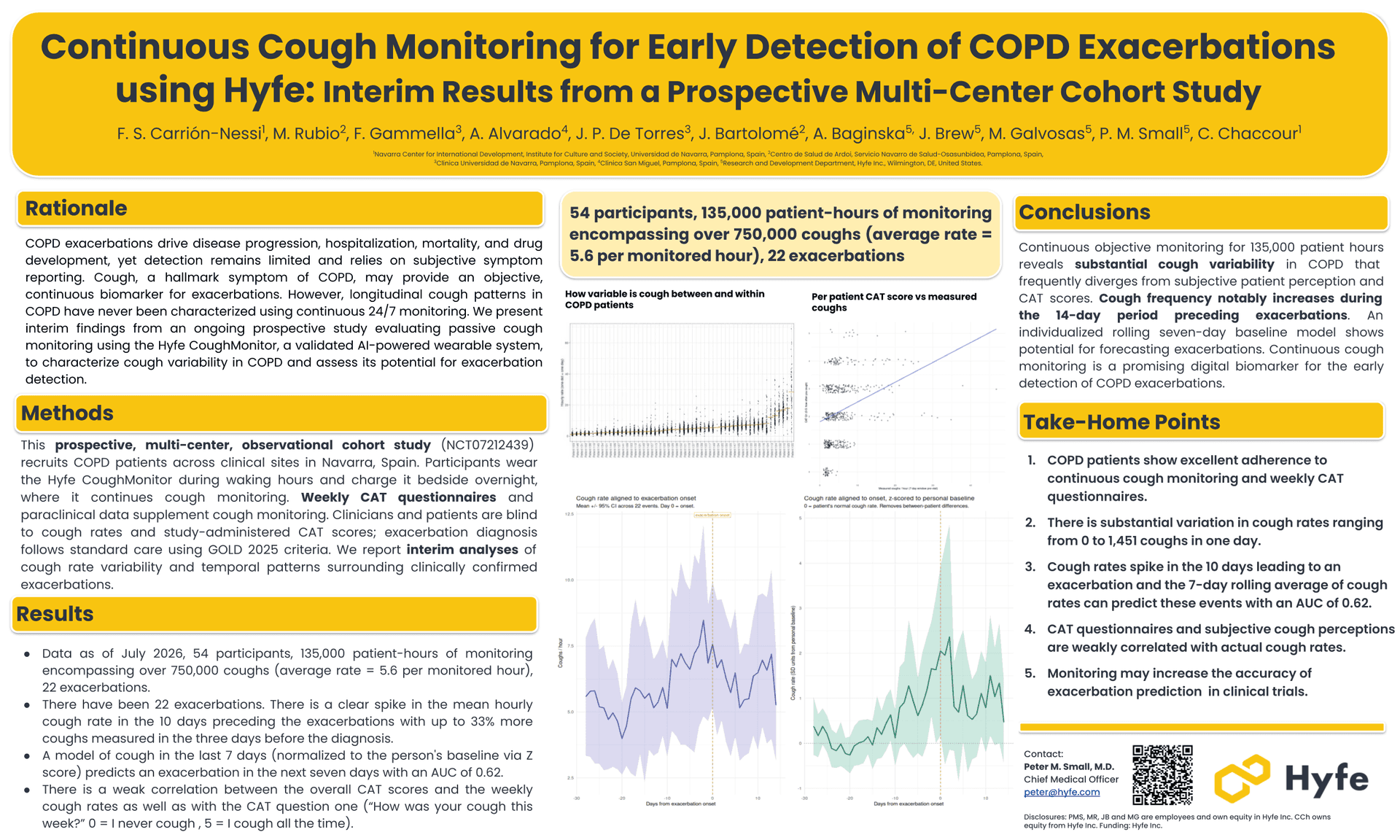
Updated interim data from 54 COPD patients and 135,000 monitored hours, showing cough rates rise in the days before exacerbations and correlate only weakly with CAT scores.
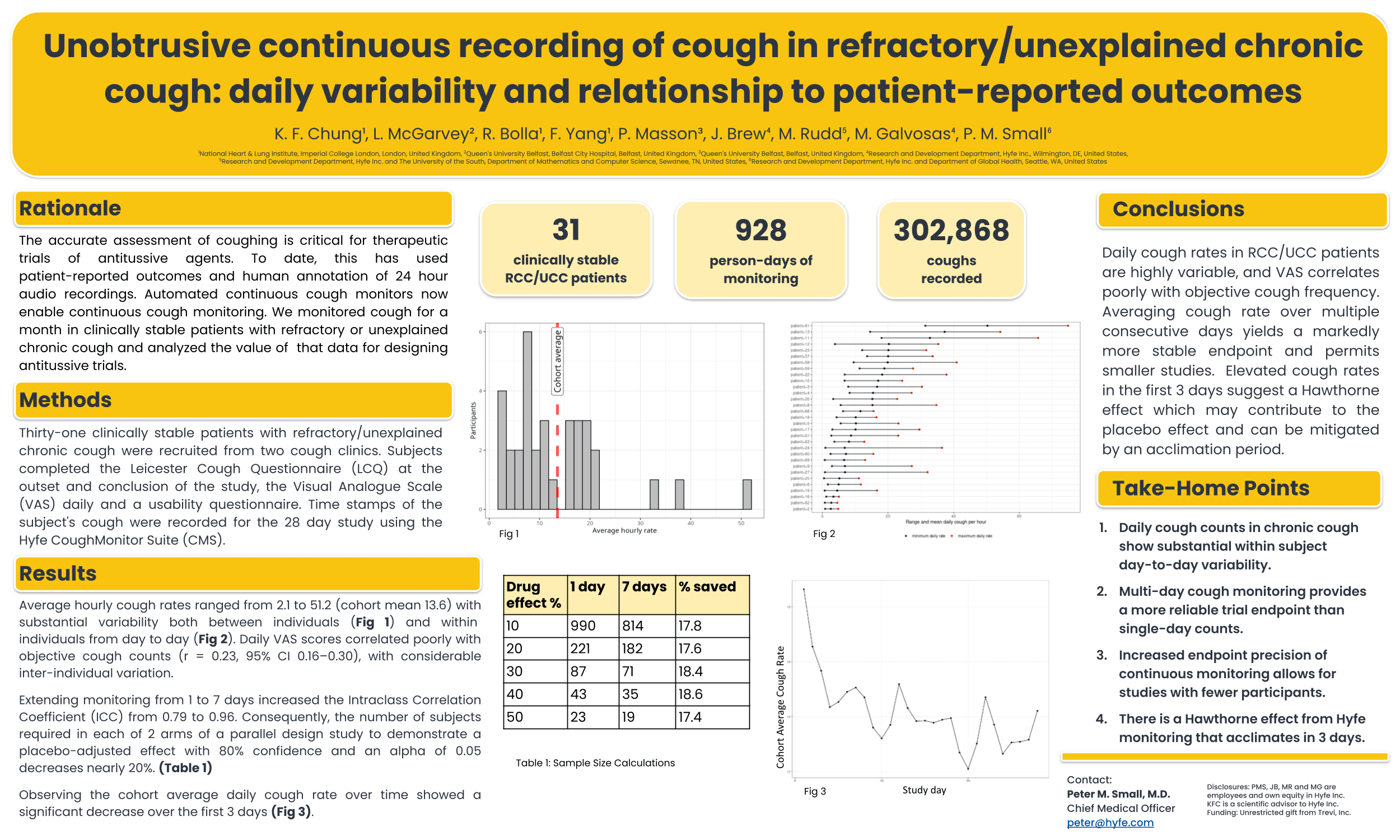
A month of continuous monitoring in stable chronic cough shows that multi-day averaging makes cough frequency a more reliable trial endpoint, allowing smaller studies, and reveals a short-lived Hawthorne effect.
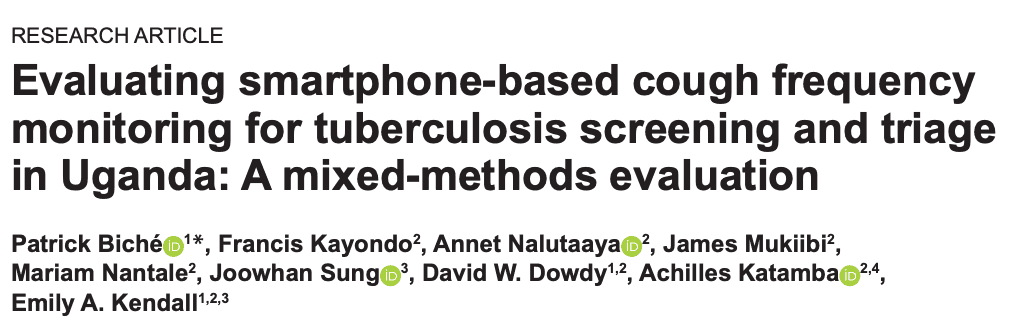
Mixed-methods study in Kampala assessing 48-hour cough frequency monitoring with the Hyfe Research app for TB screening and triage, alongside staff-reported implementation barriers.
1 October 2026
Symptom-based TB screening relies heavily on self-reported cough, which is subjective and inconsistently assessed. This study evaluated whether objectively recorded cough frequency could help identify people with TB in Kampala, Uganda, in both community screening and health facility triage settings, and explored the practical barriers to collecting it.
Adults with microbiologically characterized TB status completed 48 hours of passive cough monitoring with the Hyfe Research app. Among 197 participants with valid recordings, people with TB coughed significantly more often than those without, in both the community (median 2.2 vs 0.9 coughs per hour) and health facilities (6.7 vs 2.4). Cough frequency discriminated TB with AUCs of about 0.7 in each setting. That fell short of WHO accuracy targets for a standalone screening or triage test, although in the community, a frequency threshold matched to the specificity of self-reported cough identified significantly more TB cases. Recorded frequency correlated moderately with self-reported severity, quality of life scores and staff-observed coughing.
Interviews with research staff identified concerns about device visibility, stigma and personal security as major barriers that limited completion. The authors conclude that cough frequency carries a real TB-related signal and may add value within multi-step screening strategies. They also call for more discreet wearable designs and longer or personalized monitoring approaches.