53
Research Trials
20
Peer-reviewed publications
16
Clinical Conditions
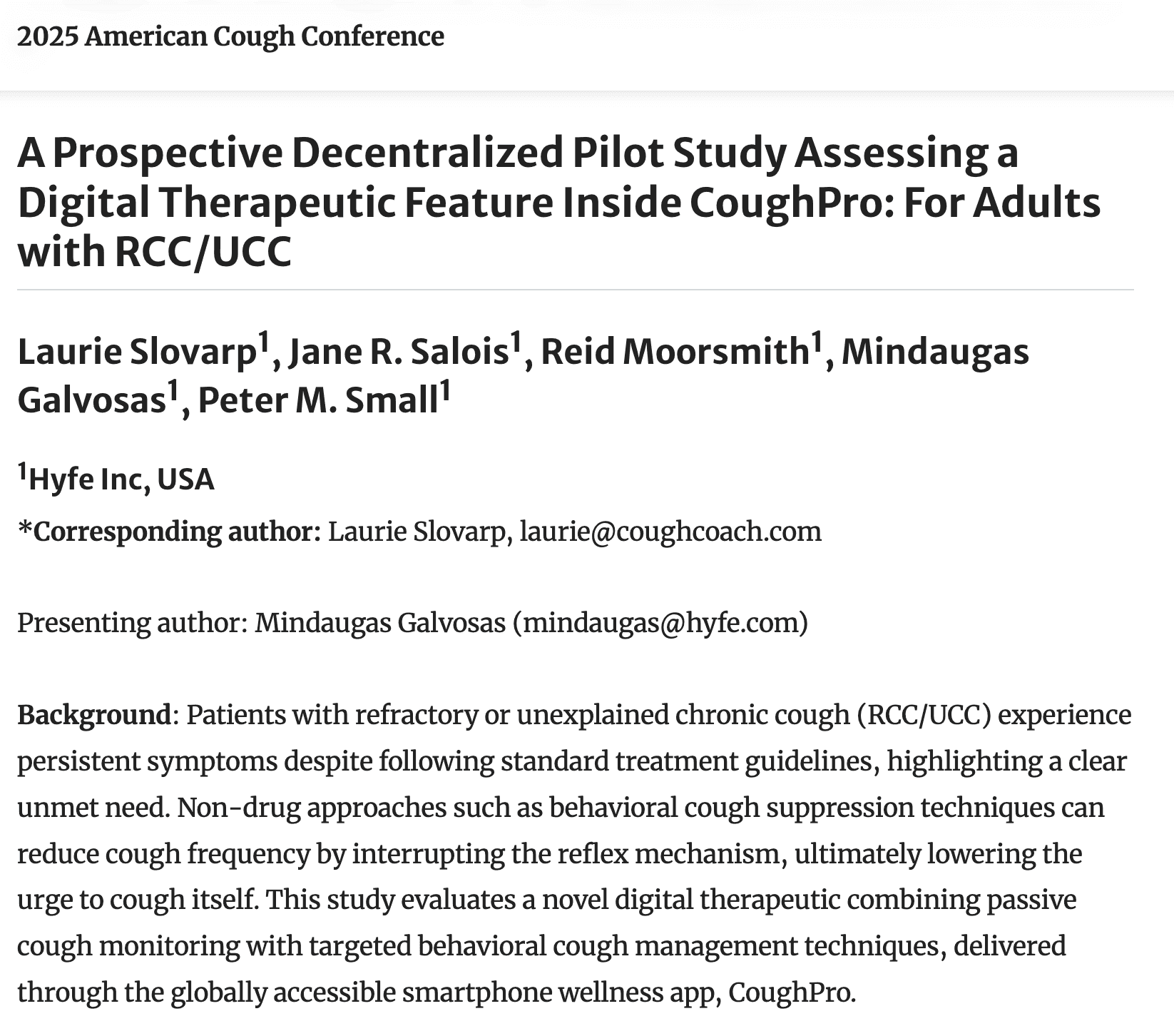
Hyfe pilot study tests a digital therapeutic combining passive cough monitoring with behavioral suppression techniques delivered through the CoughPro app.
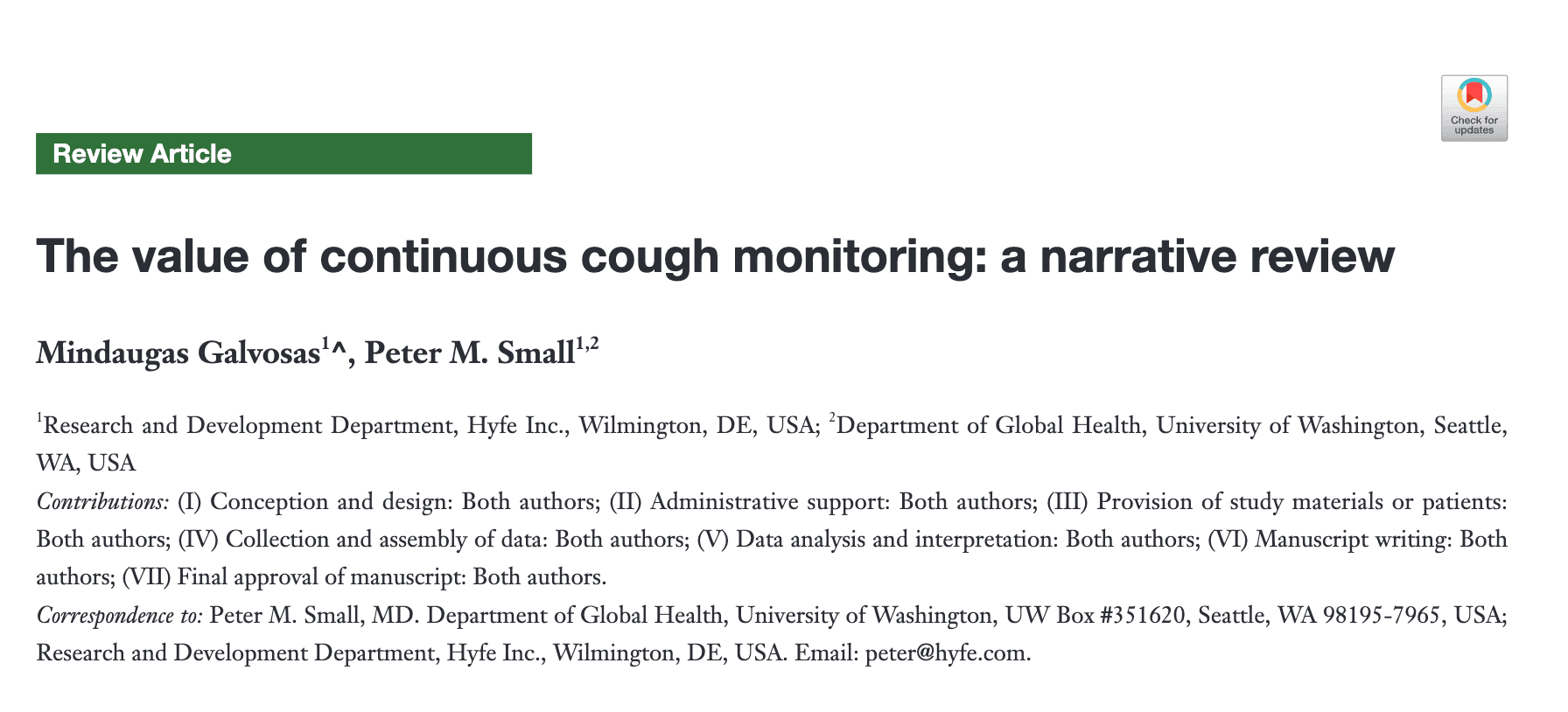
This narrative review by Hyfe's R&D team makes the case that continuous cough monitoring (CCM), powered by acoustic AI, transforms cough from a subjective symptom into a quantifiable digital biomarker.
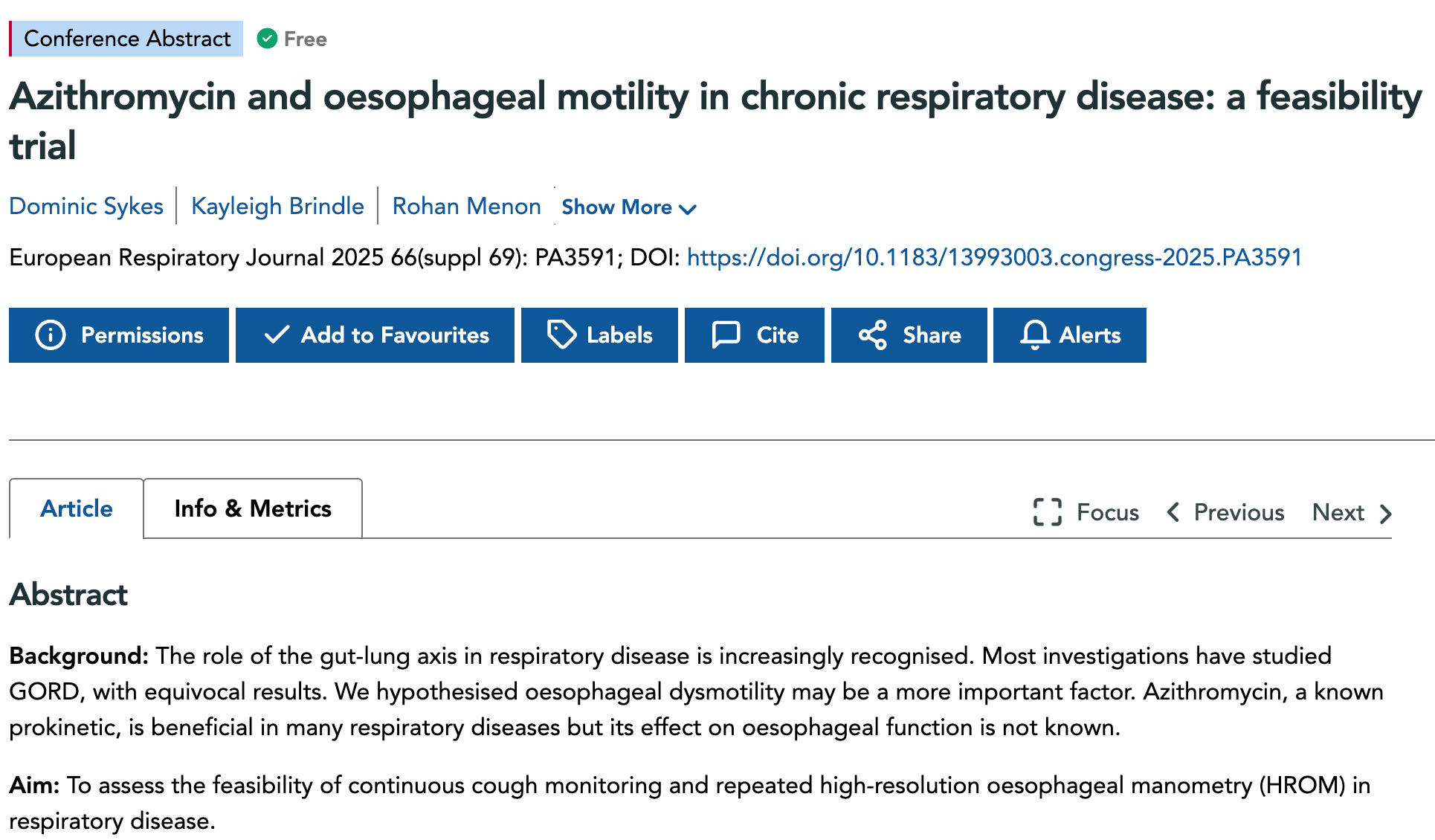
Independent ERS 2025 NeuroCOUGH trial uses the Hyfe Cough Tracker to test feasibility of studying azithromycin's effect on cough and oesophageal motility.
8 October 2024
Treatment of chronic cough remains a challenge. It was hypothesised that inhaled alkaline hypertonic divalent salts (alkaline HDS) might provide relief for refractory chronic cough by laryngeal and tracheal hydration.
We conducted an exploratory, single-blinded, nasal saline-controlled study in 12 refractory chronic cough patients to examine cough suppression efficacy of an alkaline HDS composition (SC001) at pH 8 or pH 9 administered by nasal inhalation. As control, we used nasal saline with the same hand-held pump spray aerosol device. Each subject was monitored continuously using a Hyfe CoughMonitor Suite's watch (older version than available in 2024) for 1 week of baseline, 1 week of control treatment and 1 week of active treatment.
Baseline daily cough rates ranged from 4 to 34 coughs·h−1 with mean visual analogue score 65±17 pre- and post-baseline testing. Control-adjusted efficacy of cough rate reduction ranged from 15% (p=0.015) (from Day 1) to 23% (p=0.002) (from Day 3). Control-adjusted efficacy was highest with SC001 pH 9 (n=5), ranging from 25% (p=0.03) (from Day 1) to 35% (p=0.02) (from Day 3), and lowest for SC001 pH 8 (n=7), ranging from 9% (p=0.08) (from Day 1) to 16% (p=0.02) (from Day 3). Hourly cough counts and visual analogue score correlated for baseline (r=0.254, p=0.02) and control (r=0.299, p=0.007) monitoring weeks. Treatment improved this correlation (r=0.434, p=0.00006). No adverse events were reported.
Alkaline (pH 9) HDS aerosol is a promising treatment for refractory chronic cough and should be further evaluated.