53
Research Trials
20
Peer-reviewed publications
16
Clinical Conditions
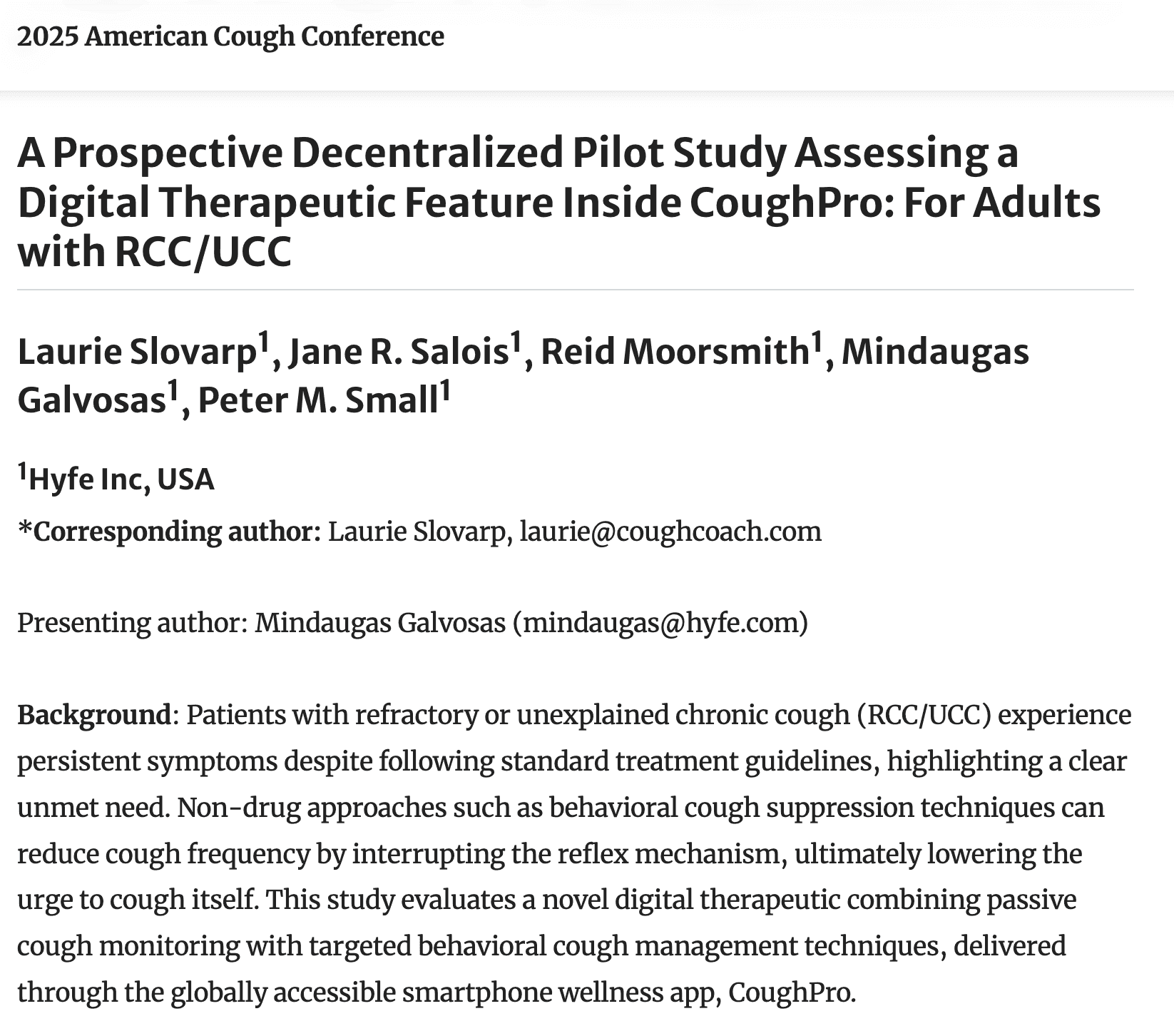
Hyfe pilot study tests a digital therapeutic combining passive cough monitoring with behavioral suppression techniques delivered through the CoughPro app.

This narrative review by Hyfe's R&D team makes the case that continuous cough monitoring (CCM), powered by acoustic AI, transforms cough from a subjective symptom into a quantifiable digital biomarker.

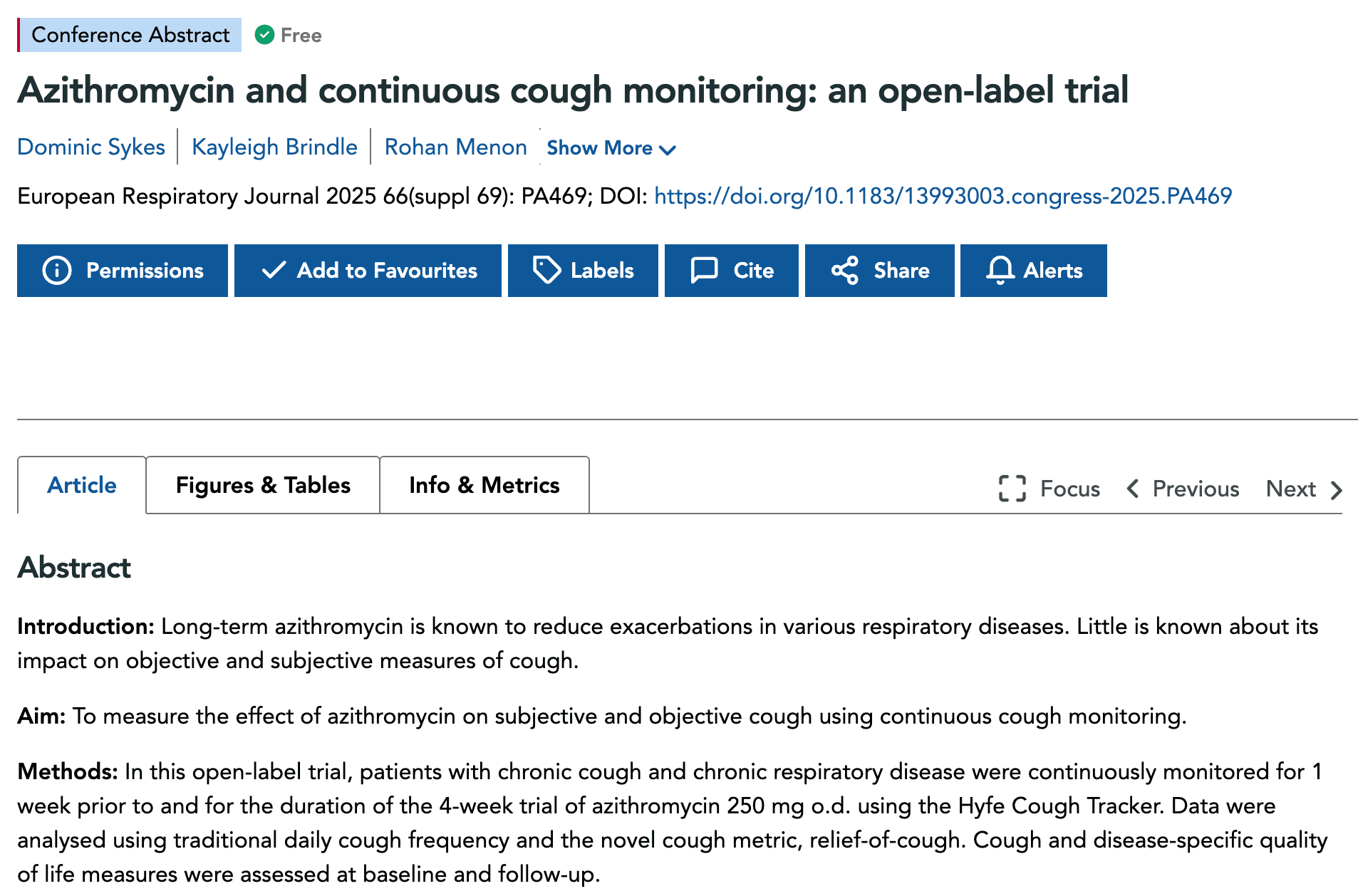
Independent ERS 2025 NeuroCOUGH trial uses the Hyfe Cough Tracker to test feasibility of studying azithromycin's effect on cough and oesophageal motility.
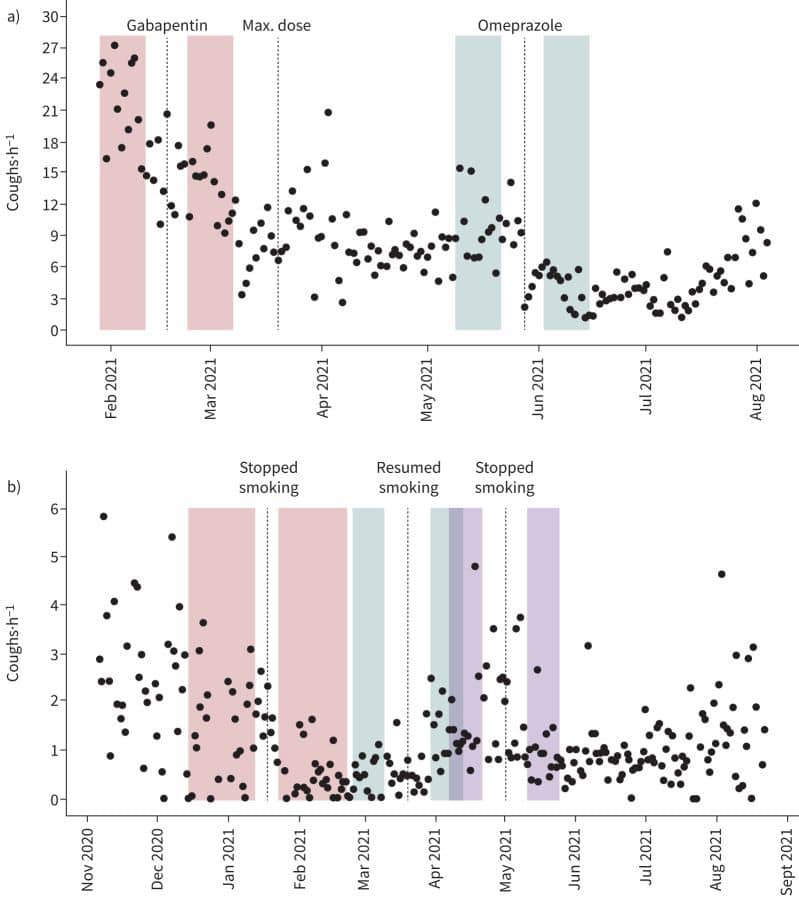
This paper explores the complexities involved in monitoring cough frequency to detect changes in clinical status. The study involved 616 participants, who cumulated a mmonitoring period longer than nine person-years, registering a total of 62,325 coughs. This comprehensive monitoring was achieved using smartphone-based acoustic artificial intelligence software developed by Hyfe AI.
One of the key findings is the stochastic nature of an individual's cough patterns. The data revealed that these patterns follow a binomial distribution, indicating significant variability both within and between days. A critical insight from the study is the challenge of accurately detecting changes in cough frequency. The researchers found that relying on intermittent sampling, such as 24-hour monitoring, can lead to inaccurate estimates of changes in cough frequency. This inaccuracy is particularly pronounced in individuals with low cough rates or those exhibiting high variance in their cough patterns.
The study's findings are significant in the context of using cough frequency as a tool for monitoring clinical status changes, especially in respiratory diseases. It highlights the importance of prolonged and continuous monitoring to obtain reliable data, which is more representative of an individual's cough pattern over time. The study's results emphasize the limitations of short-term cough monitoring and the potential risks of misinterpretation in clinical assessments based on such limited data.
The paper also discusses the implications of these findings for the development and use of digital health tools, particularly those employing artificial intelligence for passive cough monitoring. It underscores the need for careful consideration of the duration and method of cough monitoring to ensure accurate and meaningful clinical interpretations.