53
Research Trials
20
Peer-reviewed publications
16
Clinical Conditions
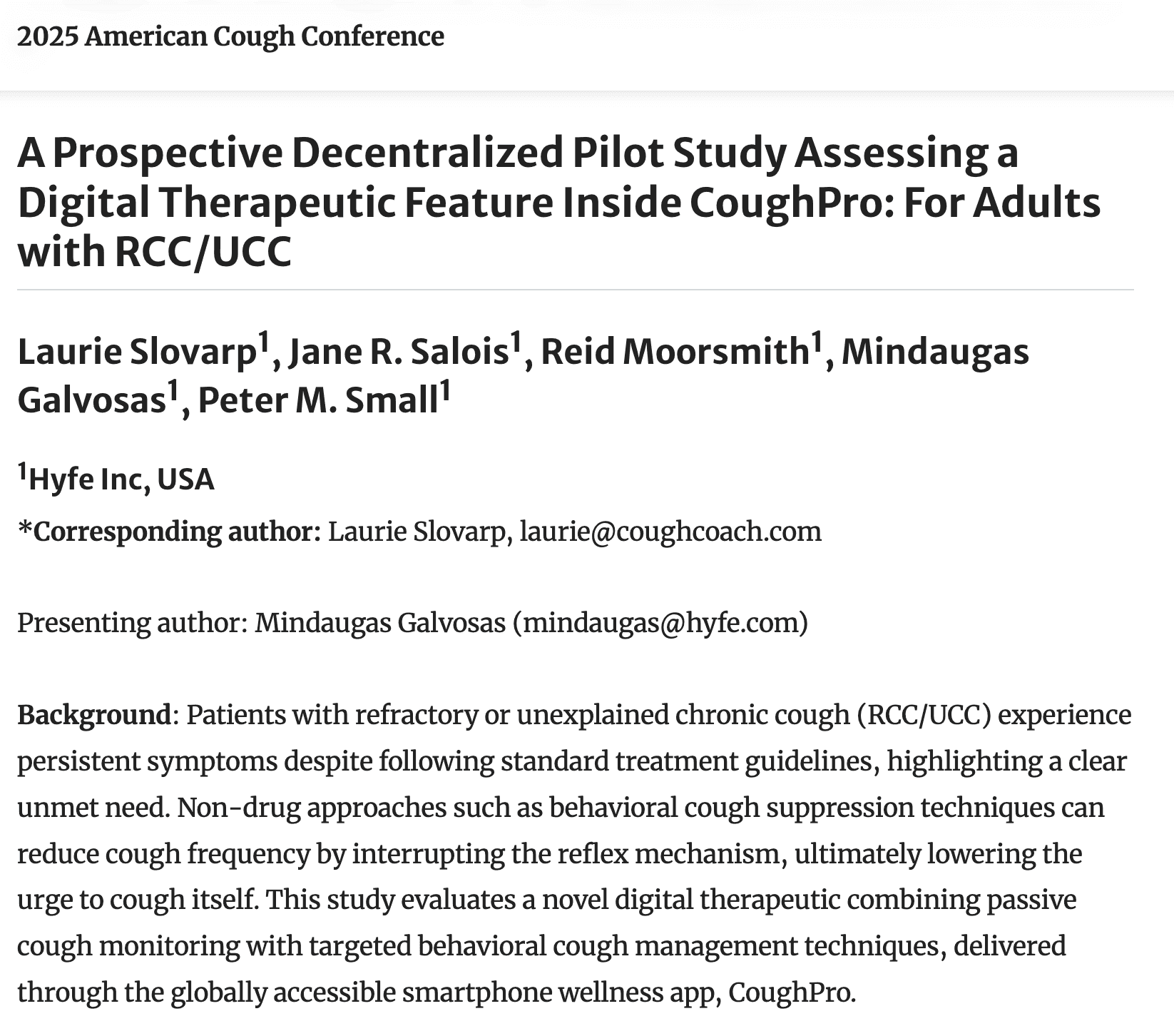
Hyfe pilot study tests a digital therapeutic combining passive cough monitoring with behavioral suppression techniques delivered through the CoughPro app.

This narrative review by Hyfe's R&D team makes the case that continuous cough monitoring (CCM), powered by acoustic AI, transforms cough from a subjective symptom into a quantifiable digital biomarker.

Independent ERS 2025 NeuroCOUGH trial uses the Hyfe Cough Tracker to test feasibility of studying azithromycin's effect on cough and oesophageal motility.
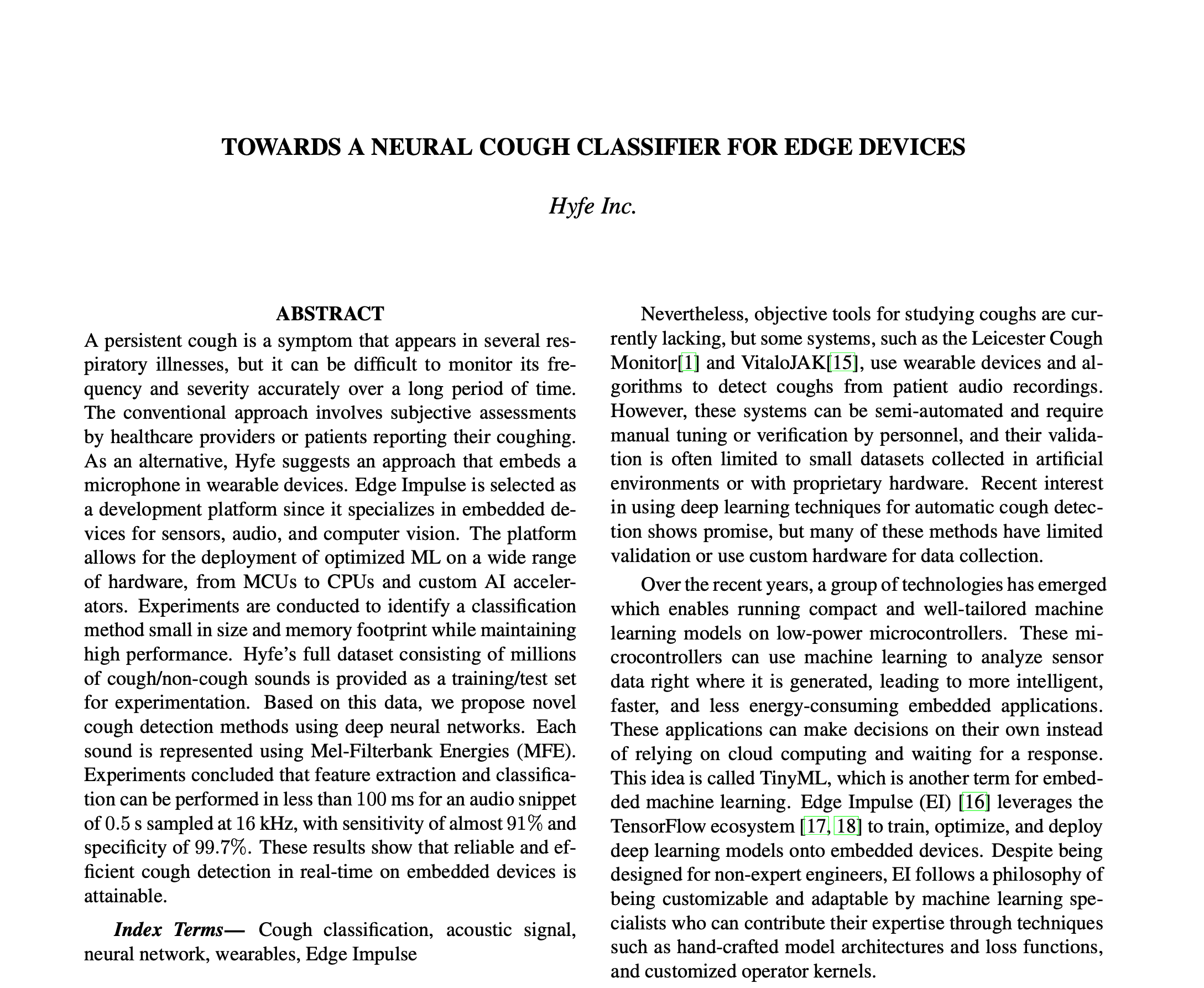
This paper focuses on the viability of a system for automatic cough detection and classification, tailored for integration into various devices. Hyfe. has created a Software Development Kit (SDK) that facilitates the incorporation of this cough detection technology into a wide range of operating systems and devices, including Windows, Linux, Mac OS, Android, iOS, and embedded targets.
To build this system, Hyfe gathered a substantial dataset containing hundreds of millions of cough and non-cough audio samples. These samples were processed and prepared for use in model training by downsampling and encoding. The Edge Impulse platform played a crucial role in managing this dataset and facilitating model development.
The core of the system relies on using Mel-Filterbank Energies (MFEs) for acoustic representation. This choice is significant as MFEs are designed to mimic the non-linear sensitivity of the human auditory system, making them effective for analyzing cough sounds. Hyfe experimented with various neural network models, including 2D-convolutional layers and fully connected deep neural networks, to optimize the cough detection system.
A key challenge addressed in the development process was balancing the accuracy of the cough detection model with the computational limitations of edge devices. This balance is essential for real-time performance and practical applications. The Edge Impulse platform facilitated the comparison of different models based on performance metrics such as accuracy, precision, recall, inference time, peak RAM usage, and FLASH usage.
The culmination of this research and development effort is a cough detection system that boasts impressive sensitivity and specificity rates, alongside efficient performance metrics like low inference times and minimal memory requirements. This development opens up new possibilities for enhanced cough detection capabilities in a variety of embedded applications, potentially leading to significant advancements in healthcare monitoring and diagnostics.