62
Research Trials
22
Peer-reviewed publications
17
Clinical Conditions
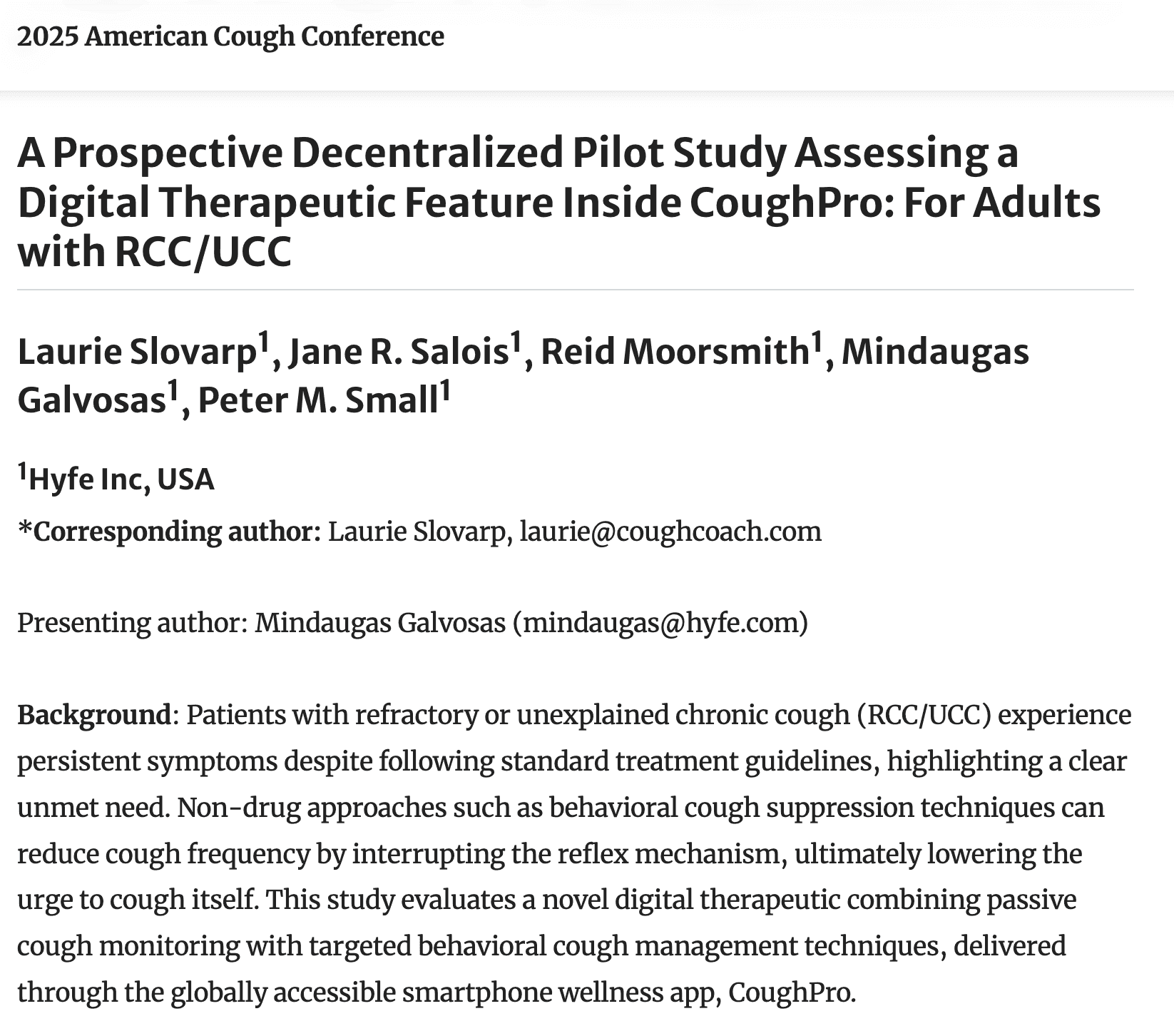
Hyfe pilot study tests a digital therapeutic combining passive cough monitoring with behavioral suppression techniques delivered through the CoughPro app.
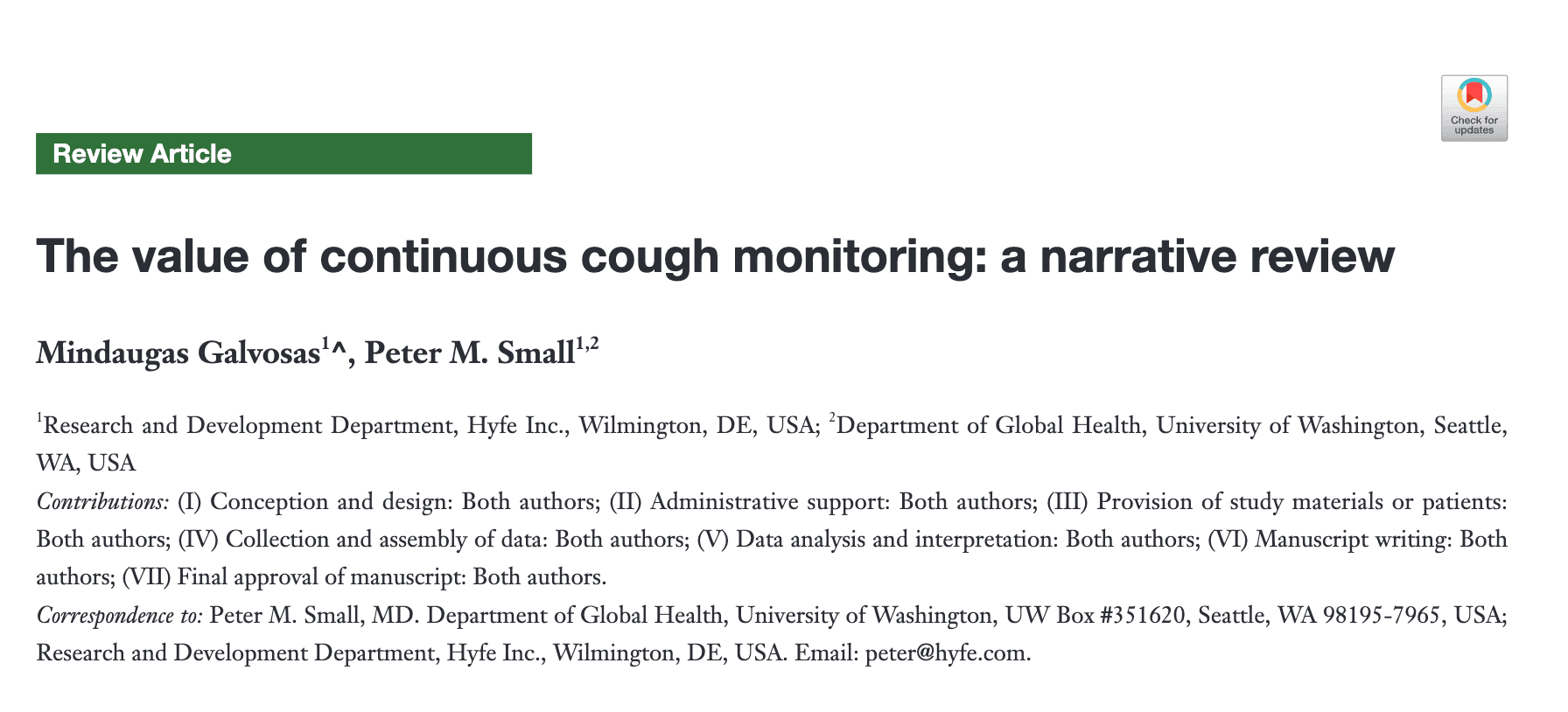
This narrative review by Hyfe's R&D team makes the case that continuous cough monitoring (CCM), powered by acoustic AI, transforms cough from a subjective symptom into a quantifiable digital biomarker.
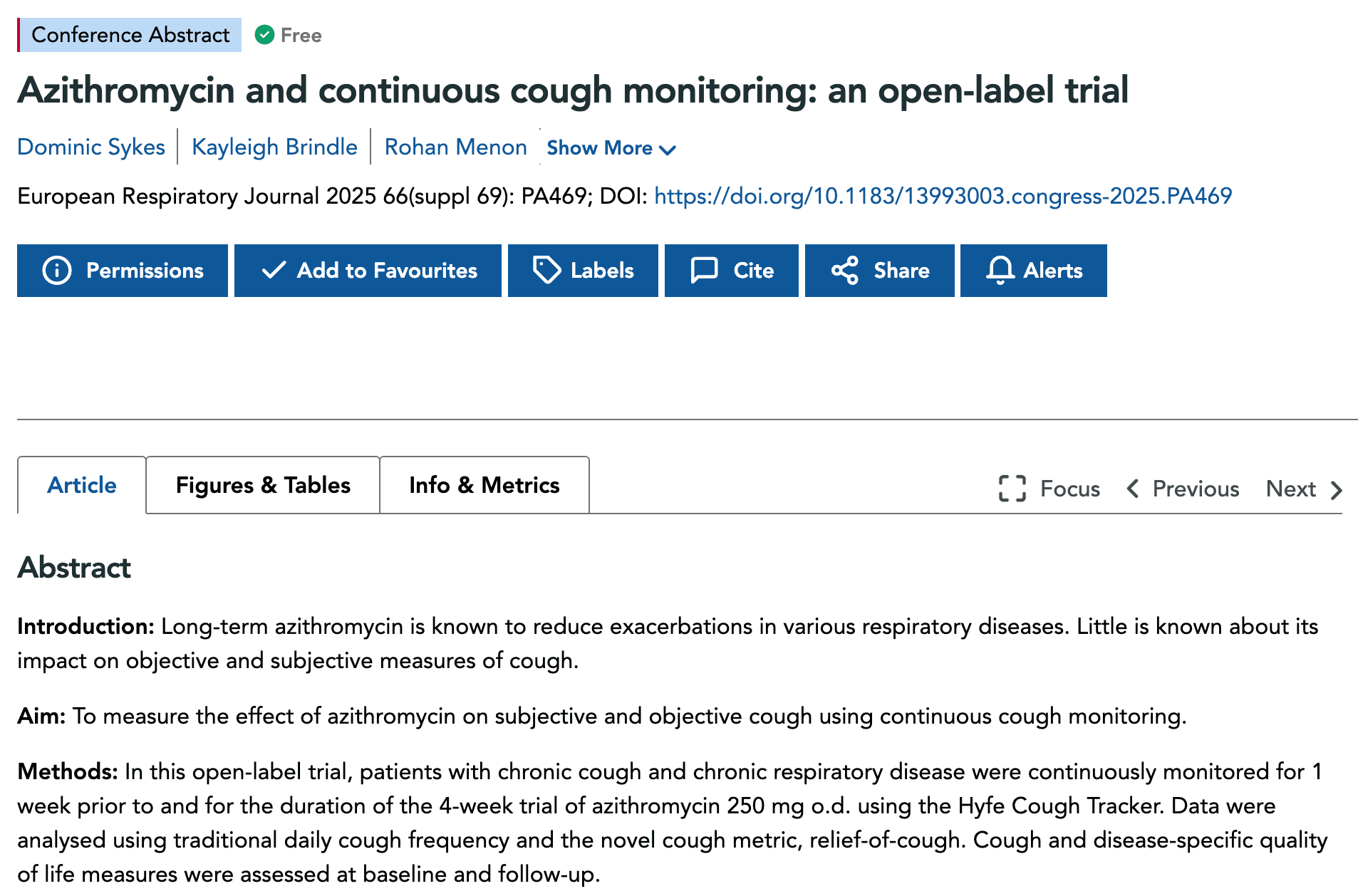
Independent ERS 2025 trial uses the Hyfe Cough Tracker to show azithromycin reduces objective cough frequency by week one in chronic respiratory disease.
6 January 2025
This multicenter observational study compared the results of the Hyfe CoughMonitor wrist-worn device with manually counted coughs in subjects with a variety of etiologies as they went about their usual daily activities. We collected 24 h of continuous sounds from subjects while they simultaneously wore a CoughMonitor and an audio recorder. Coughs were labelled by multiple trained annotators who listened to the continuous audio recordings using validated methodology. The time stamps of these human-detected coughs were compared to those of the CoughMonitor to determine the system’s overall performance using event-to-event and hourly rate correlation analyses.
Over the 546 h monitored, 4,454 cough events were recorded; The overall sensitivity was 90.4% (95% CI of 88.3–92.2%). The overall false positive rate was 1.03 false positives per hour (95% CI of 0.84 to 1.24). The overall correlation between manual and CoughMonitor measured hourly coughing was high (Pearson correlation coefficient of 0.99). In addition, two case studies of long-term monitoring of patients with chronic cough are presented.