53
Research Trials
20
Peer-reviewed publications
16
Clinical Conditions
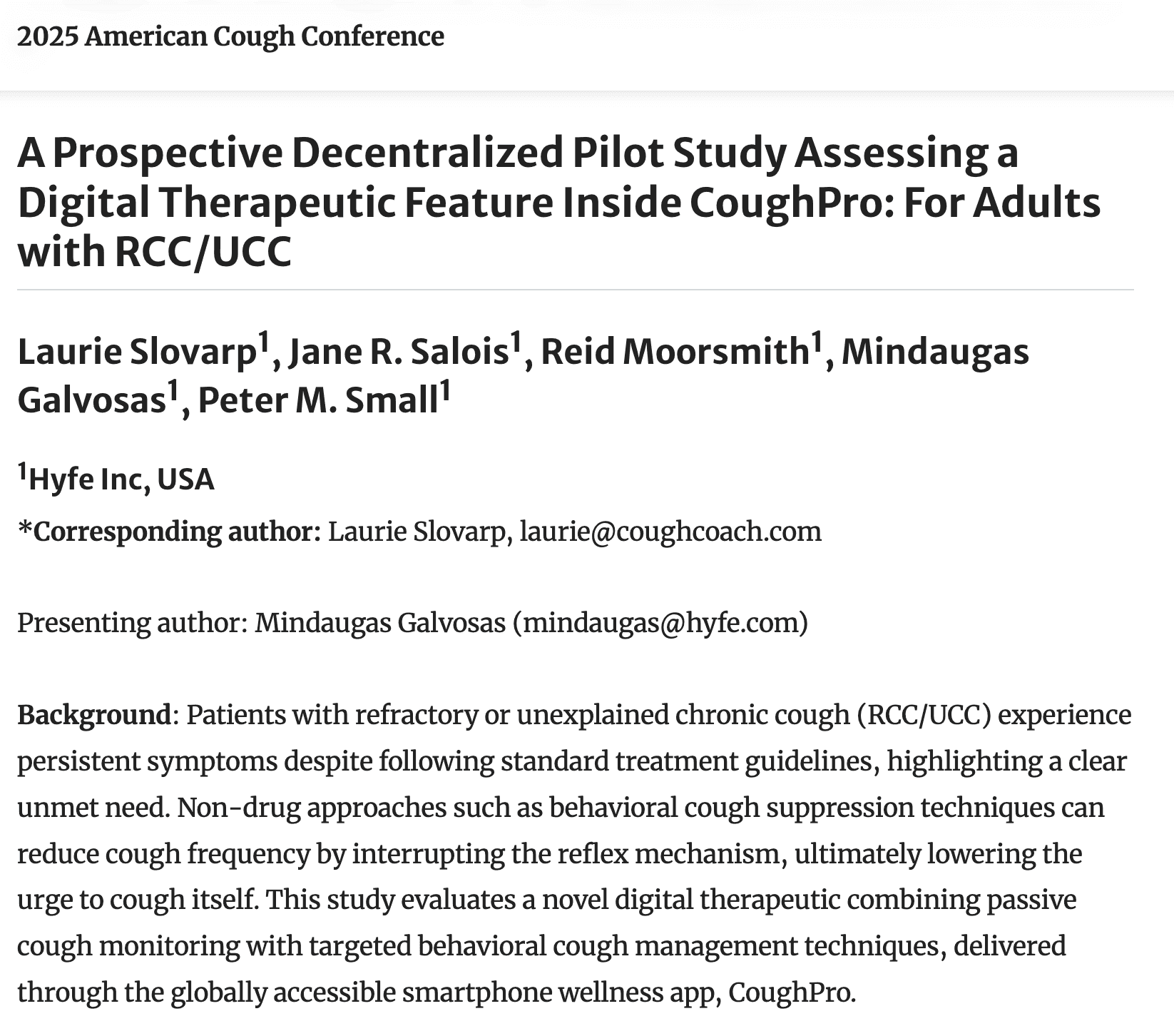
Hyfe pilot study tests a digital therapeutic combining passive cough monitoring with behavioral suppression techniques delivered through the CoughPro app.
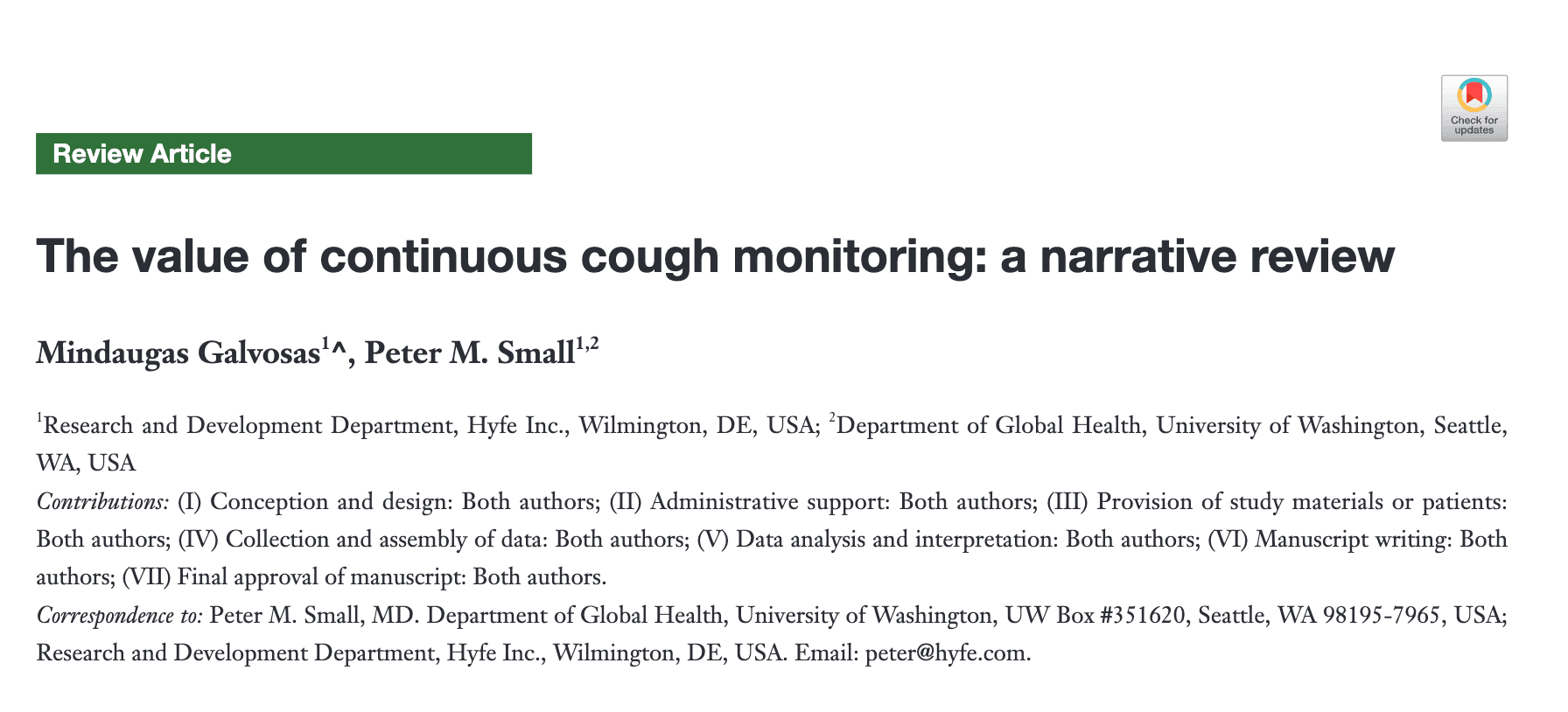
This narrative review by Hyfe's R&D team makes the case that continuous cough monitoring (CCM), powered by acoustic AI, transforms cough from a subjective symptom into a quantifiable digital biomarker.
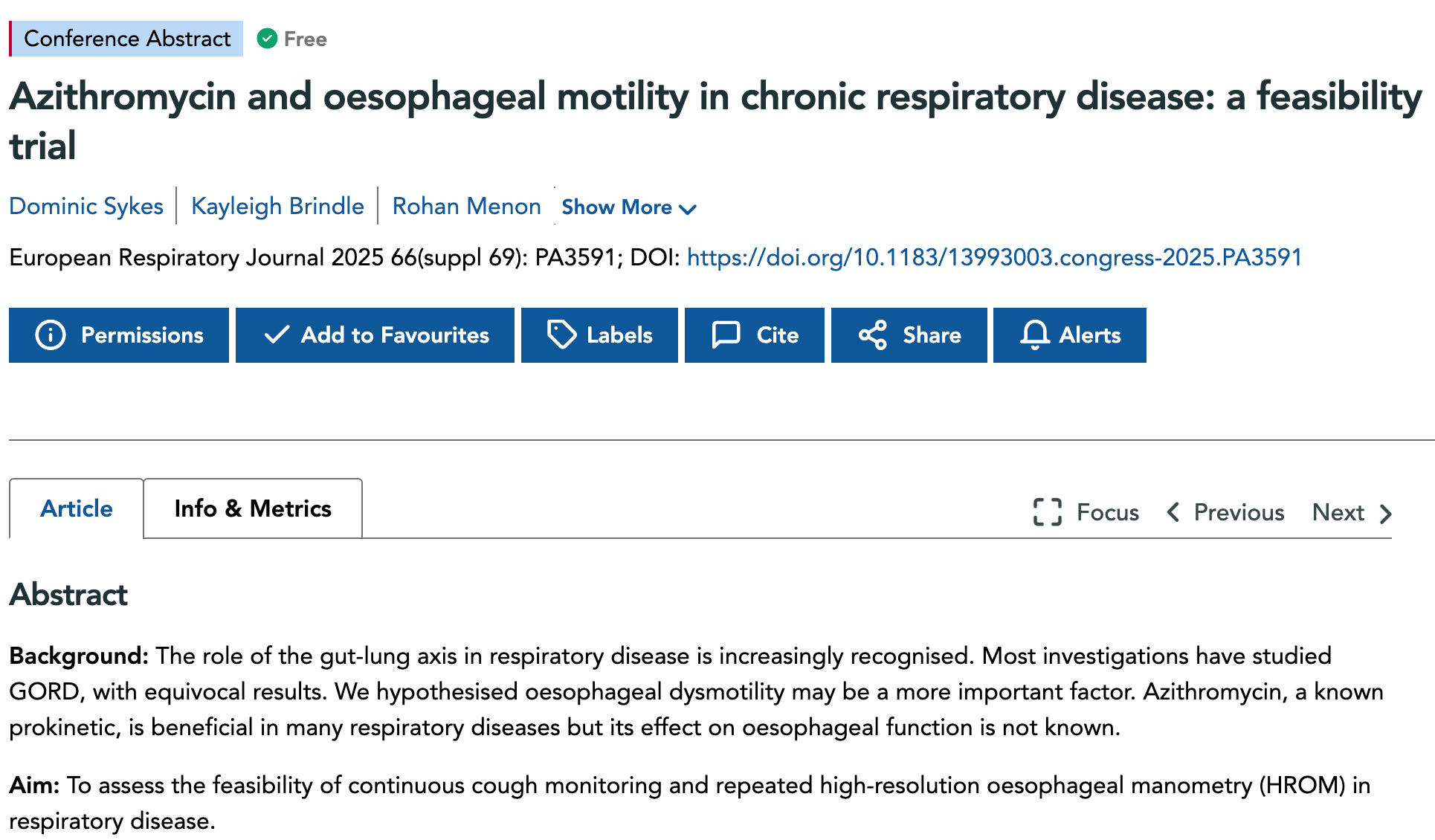
Independent ERS 2025 NeuroCOUGH trial uses the Hyfe Cough Tracker to test feasibility of studying azithromycin's effect on cough and oesophageal motility.
1 August 2024
We determined the cough counts and their variability in subjects with persistent cough for 30 days.
The Hyfe cough tracker app uses the mobile phone microphone to monitor sounds and recognizes cough with artificial intelligence-enabled algorithms. We analyzed the daily cough counts including the daily predictability rates of 97 individuals who monitored their coughs over 30 days and had a daily cough rate of at least 5 coughs per hour.
The mean (median) daily cough rates varied from 6.5 to 182 (6.2 to 160) coughs per hour, with standard deviations (interquartile ranges) varying from 0.99 to 124 (1.30 to 207) coughs per hour among all subjects. There was a positive association between cough rate and variability, as subjects with higher mean cough rates (OLS) have larger standard deviations. The accuracy of any given day for predicting all 30 days is the One Day Predictability for that day, defined as the percentage of days when cough frequencies fall within that day’s 95% confidence interval. Overall Predictability was the mean of the 30-One Day Predictability percentages and ranged from 95% (best predictability) to 30% (least predictability).
There is substantial within-day and day-to-day variability for each subject with persistent cough recorded over 30 days. If confirmed in future studies, the clinical significance and the impact on the use of cough counts as a primary end-point of cough interventions of this variability need to be assessed.